
The Global Stage: COP28 Recognition
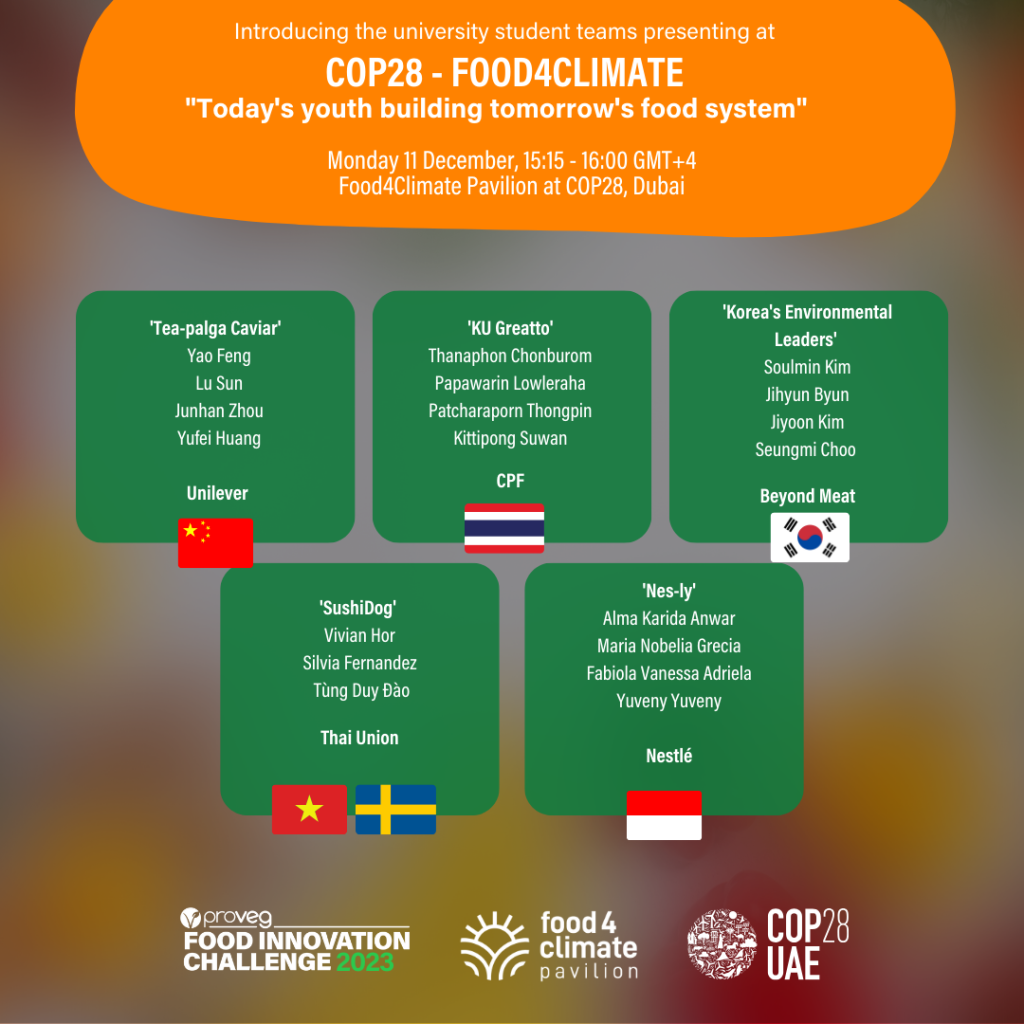
In a significant milestone for the competition, 25 finalist teams from China, Indonesia, South Korea, Thailand, and Vietnam were selected to present their innovative solutions at the UN Climate Summit (COP28) in Dubai. Five teams showcased their concepts at the ProVeg Food4Climate Pavilion, directly linking student innovation with global climate action.
- Scale: 1,093 students from 384 teams across 23 countries and 260 colleges.
- Industry Integration: Supported by global giants Nestlé and Unilever, alongside regional leaders like Green Rebel (Indonesia), Unlimeat (South Korea), and Zuming (China).
- Economic Support: A total of $13,400 in prize money was awarded to 32 innovative teams.
Strategic Innovation Highlights
The 2023 edition emphasized solving critical global issues, from food security and overfishing to the needs of an aging population.
Champion: Keepin’ it Shrimple (National University of Singapore)
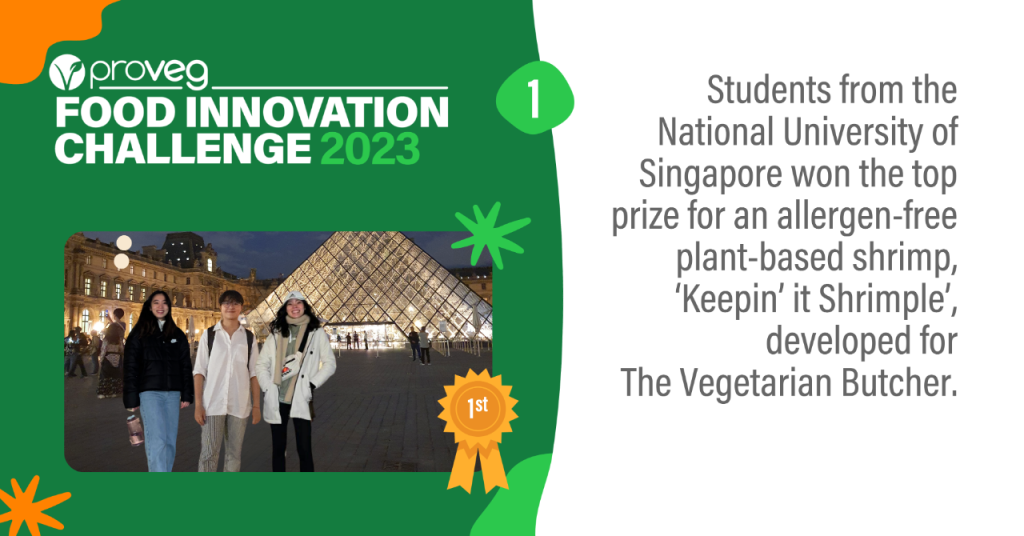
The top prize was awarded for an allergen-free plant-based shrimp developed for The Vegetarian Butcher. While the global plant-based shrimp market is valued at $1.2 billion, allergen-free options remain a significant market gap. This project addressed both food safety and the looming seafood shortage caused by overfishing.
High-Impact Finalists:

- Silver Economy Focus (Jinan University, China): Developed an easy-to-chew plant-based meat for Beyond Meat, specifically targeting the nutritional needs of Asia’s growing elderly demographic.
- Sustainable Luxury (South China University of Technology): Created a sustainable plant-based caviar alternative, demonstrating the potential for premium eco-friendly products.
- Market-Ready Convenience: * Protein Power Bowl (Brunei): A ready-to-eat meal developed for 7-Eleven Thailand.
- Sushi Hot Dog (Sweden & Vietnam): A cross-border collaboration for Thai Union.
- Plant-Based Condiments (China): Innovative salad dressings for Zuming.

Key Outcomes: Why it Matters
The 2023 Challenge successfully channeled youth creativity toward the Intergovernmental Panel on Climate Change (IPCC)‘s call for a shift to plant-based diets to tackle the climate crisis.
- Filling Market Gaps: Students didn’t just replicate meat; they identified and filled niches such as allergen-free seafood and elderly nutrition.
- Cross-Border Knowledge Transfer: Joint teams (e.g., Sweden and Vietnam) facilitated the exchange of international food technology and local market insights.
- Nurturing Talent: Participants gained direct experience in an industry that is twice as efficient in terms of carbon emissions compared to animal-based systems.