



ProVeg UN Policy
What we do and why we do it
What
By engaging with international institutions, we are bringing food-system transformation and sustainable diets to the heart of the global policy agenda.
Why
Since 2017, ProVeg has increasingly engaged with international organizations, with a specific focus on UN institutions. ProVeg has received the United Nations’ Momentum for Change Award and works closely with key UN food and environment agencies. We have observer status with the United Nations Framework Convention on Climate Change (UNFCCC) and the Intergovernmental Panel on Climate Change, and special consultative status with the Economic and Social Council. We are also a member of the Climate Technology Center and Network, are accredited for the UN Environment Assembly, and are an official partner of the UN Decade on Ecosystem Restoration.
This broad access to UN organizations gives us a place at the table during key international meetings and negotiations, and provides a powerful platform to advocate for a global shift towards more plant-rich food systems. By building long-term relationships with UN institutions, we aim to mainstream the shift towards plant-based diets as a critical mechanism for tackling climate change, protecting biodiversity, and improving people’s health.
Our approach
UN Working Groups
- Member of the Food & Climate Action Group.
- Involved with the World Federation for Animals’ UNFCCC Working Group.
- Involved with YOUNGO, the Official Children and Youth Constituency of the UNFCCC, through our Youth employees and Youth Board.
- Member of the Climate Action Network, and through them, the official Environmental NGOs Constituency of the UNFCCC (ENGO).
- Member of the Global School Meals Coalition from the UN Food Systems Summit process.
- Member of the Beans is How coalition.
- Member of the UN Environmental Programs’ NGOs Major Group.
- Member of the High Level Political Forum’s NGO Major Group.
Collaborations with NGOs
- Joint campaigns, including open letters, joint statements, and social-media actions.
- High-level meetings and negotiators dinners.
- Side events and press conferences at UN Conferences.
- Food4Climate Pavilion at COP27 and COP28.
- The Action On Food Hub at COP29 and COP30.
- The COP30 Food Coalition.
Our policy demands
- The transition from animal husbandry to plant production should be made possible by financial support and retraining.
- Subsidies for animal-based products (e.g. via reduced VAT rates) should be discontinued and socially cushioned.
- Plant-based alternatives should be promoted through a reduced VAT rate of 7%.
- An information campaign about healthy plant-based nutrition.
- Plant-based meals should be offered daily as standard in institutional catering.
- Alternative sources of protein (e.g. vegetable and cultivated) should be promoted.
Policy Briefs

Key Youth Demands for Plant-Rich Food Systems
Why Plant-Rich Food Systems? The transition to more plant-rich food systems is one of the most effective…

Policy pathways to healthy and sustainable retail food environments
Retail food environments Supermarkets Convenience stores VendingMachines OnlinePlatforms Retail…

Future Fit Farming: Policy solutions for diverse, resilient agricultural systems
Mounting challenges underline the need to rethink the future of agriculture and food production. The combined…

The Diets Toolkit
Developed by Climate Focus on behalf of ProVeg International and the WWF, the Diets Toolkit: An NDCs and NBSAPs Guide for Healthy and Sustainable Diets equips policymakers and other stakeholders with practical guidance…
COP27 and COP28: Food4Climate Pavilion
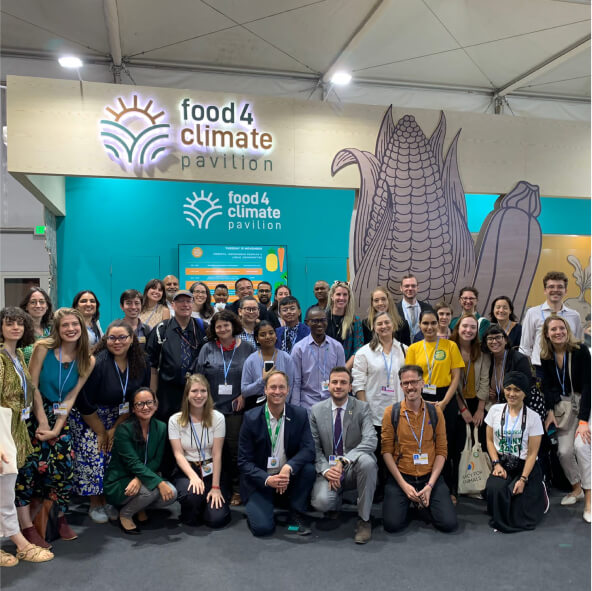
The launch of the Food4Climate Pavilion at COP27 in 2022, alongside other food-system Pavilions, was a groundbreaking moment as it signified recognition at a UN level of the relationship between climate change and food production.
We already have 15 partner organizations signed up to join ProVeg at its Pavilion, including World Animal Protection, A Well-Fed World, Humane Society International, the Buddhist Tzu Chi Foundation, Four Paws, Food Tank, Mercy For Animals, the Jeremy Coller Foundation, Compassion in World Farming, Upfield, Impossible Foods, the MENA Youth Network, Young Professionals for Agricultural Development, the International Association of Students in Agricultural and Related Sciences, and the YOUNGO Food and Agriculture Working Group.
Since then, ProVeg International has been building on the successes of COP27 and COP28, and further emphasized the need to make the shift towards plant-rich diets, while adopting sustainable and resilient agricultural practices and reducing food loss and waste.

COP29 and COP30: Action on Food Hub
In Baku, Azerbaijan, ProVeg joined forces with EIT Food and merged the Food Systems Pavilion and the Food4Climate Pavilion into a single dedicated space: the Action on Food Hub, which united more than 20 partners working on sustainable and resilient food systems. The partnership between ProVeg International and EIT Food aimed to give COP delegates the opportunity to learn about how climate emissions can be reduced, and biodiversity restored, through food-system change.
ProVeg International led policy efforts at the Hub, convening focused workshops on diverse topics such as climate finance, biodiversity, nutrition, and health with negotiators and stakeholders from across the world’s food systems. The workshops aimed to provide evidence-based resources about the role of food systems in climate adaptation and mitigation to negotiating parties, as well as ensuring that the food community at COP could better follow and support these important negotiations.
The Belém Declaration on Plant-Rich Diets
Introduced for the first time at the June Climate Meetings in Bonn, the Belém Declaration on Plant-Rich Diets is a ProVeg-led global initiative calling on governments to develop National Action Plans for Plant-Based foods in order to promote healthy and sustainable diets. Formally presented at COP30, the Declaration has been endorsed by several policymakers, including Members of the European Parliament.
Acknowledging the multiple¹ ² roles that plant-rich diets play in mitigating the climate crisis, the Belém Declaration calls on national governments to draw up and implement comprehensive and ambitious action plans for promoting plant-rich foods throughout society.
Such action plans should introduce concrete measures to encourage the production and consumption of plant-based foods³ through initiatives supported by national governments and involving cities and regional governments.
Sustainable Catering
ProVeg engages with the United Nations to provide more sustainable, healthy, and plant-forward catering at climate events. This journey reached a historic milestone in 2023 at COP28 in Dubai, where we successfully worked with the Presidency to ensure that the catering was predominantly plant-based. This set a new benchmark, featuring a plant-based food park along with cooking demonstrations that showed that climate-friendly food can be both accessible and delicious.
Building on that momentum, we continued our engagement at COP29 in Baku and, most recently, at COP30 in Belém, Brazil. At COP30, our collaboration with the Brazilian Presidency and the COP30 Food Coalition led to a significant achievement: over 50% of the meals and snacks available were plant-based or vegetarian, exceeding the 40% target set by organizers earlier in the year.
Since the precedent set at COP28, other major global events, including the Paris Olympics, have followed suit, demonstrating that plant-forward catering can be the standard for large-scale events.
We believe that what is served on the plates of climate negotiators should reflect the urgency of the climate crisis. In order to support this transition globally, we have developed a comprehensive toolkit for organizers and caterers.
ProVeg UN Youth Board
ProVeg’s UN Team is proud to present the ProVeg Youth Board. Every cohort comprises 20 outstanding young people from around the world. These global youth activists advise our UN team and help to spread the message in the lead-up to the annual UN Climate Change Conferences and other major climate events.
Learn more about the members of the Youth Board and their amazing work here.


About the ProVeg UN Policy Team
The current team comprises a group of dedicated policy experts who are committed to achieving ProVeg’s global mission. Read on to learn more about them and the work they do at ProVeg.

Juliette Tronchon
Head of UN Affairs
As Head of UN Affairs, Juliette is at the forefront of ProVeg’s mission to reshape global food systems. Since January 2024, she has been leading the UN team and has evolved the organization’s diplomatic reach, most notably by spearheading the Belém Declaration on Plant-Rich Diets.
Having directed the Food4Climate Pavilion at COP27 and COP28 as a way to to center food systems within the UN climate agenda, Juliette is a veteran of the international climate circuit. Her work focuses on creating actionable pathways for resilient agri-food systems and plant-rich diets through direct engagement with global policymakers and other relevant stakeholders. Beyond her policy work, she is a dedicated mentor and champions young voices in order to accelerate the transition to sustainable food systems through the ProVeg Youth Board.

Bianca Maria Galatanu
Junior UN Policy Officer
Having first joined ProVeg International in 2024, Bianca draws on her background in International Relations and Environmental Policy and her passion for systemic and interconnected thinking to advance sustainable food systems transformation.
A strong believer in ‘the power of many’ and in amplifying diverse voices, Bianca manages the ProVeg Youth Board and collaborates with partners worldwide to promote healthier, more just, sustainable, and compassionate food systems.
Together with the rest of the team, Bianca engages in multilateral decision making processes, following progresses both under the UNFCCC and UNEA.
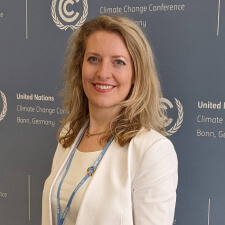
Stephanie Maw
Senior UN Policy & Advocacy Manager
Stephanie is passionate about advocating for a shift to more plant-based diets and food production as a multi-problem solution: for the environment, health, animal welfare and justice.
To achieve this, she engages with politicians, governments, policymakers and various UN agencies on food-related issues and works to influence climate change negotiations at COP and other key events. Additionally, she co-chairs the Food & Climate Action Group, a coalition of over 20 international NGOs, and strives to foster collaboration with other stakeholders and partners.
A plant-based food and language lover, Stephanie also enjoys working out and playing tennis, discovering nature, traveling and learning about history, culture and art.
Get in touch
More ways for you to get involved…






Subscribe now to receive…
- The latest ProVeg Business news.
- Consumer reports and trends.
- Plant-based food sector developments and innovations.