


Safeguarding Biodiversity through Food Choices
Food systems alone account for around 40% of global biodiversity loss, through land-use change and greenhouse gas emissions – making food the single largest lever we have to bend the curve of species loss.1 Within that footprint, animal-sourced foods do outsized damage: high-resolution mapping of global agricultural supply chains revealed that animal-sourced foods drive 71% of the biodiversity loss and 59% of the carbon loss linked to food consumption farming, with bovine meat and milk alone accounting for 41% and 29%, respectively.2
While climate change is among the biggest challenges we need to address as a global society, it’s not the only one – we are also facing the sixth mass extinction in our planet’s history.3 And this time, the extinction event is being driven by human activity.
What we eat has a massive impact on biodiversity; agriculture currently uses half of the earth’s habitable land and has drastically changed the planet’s physical environment in the last few decades. Between 2000 and 2018 alone, agriculture was responsible for about 90% of global deforestation,4 destroying the habitat of countless species around the world.
The expansion of agricultural land, particularly for livestock production, has a direct impact on the habitats of all lifeforms on earth and is a primary driver of species extinction – from animals to plants, fungi, and other microorganisms. More than half of the species that are currently at risk of extinction are threatened by agriculture.
“Shifting toward varied diets with fewer animal products could support people – particularly in the global North – in reducing their high environmental footprints.”5
– IPBES Business and Biodiversity Assessment (2026)
The Intergovernmental Science-Policy Platform on Biodiversity and Ecosystem Services (IPBES) Nexus Assessment warns that ‘Food First’ scenarios, which prioritize unsustainable production and rising per-capita meat consumption, project severe biodiversity impacts from agricultural land conversion and pollution. It points to sustainable healthy diets – rich in legumes, whole grains, fruits, vegetables, and nuts, with less red and processed meat – as key to protecting nature while delivering health, water, and climate co-benefits.6
Agriculture is a threat to more than half the species at risk of extinction7

*Threatened species include plants, animals, fungi, and other microorganisms. While agriculture is among the main threats, species are also threatened by other factors such as over-exploitation, pollution, energy, and mining. Based on data from IUCN.
The 2025 EAT-Lancet Commission update reinforces the case for this shift: a global move to healthy, sustainable diets could cut agricultural land use by around 7%, freeing land for biodiversity restoration, while preventing up to 15 million premature deaths a year and generating an estimated $5 trillion a year in economic benefits, against an investment of $200–500 billion.8
Food systems rely on biodiversity
The World Economic Forum’s Global Risks Report 2026 ranks biodiversity loss and ecosystem collapse as the second most severe global risk over the next ten years – behind only extreme weather – even as it has slipped in short-term rankings amid competing crises.9
Our food systems – and thus our global food security – depend on biodiversity and its ecosystem services. These services include soil health and the recycling of nutrients, insect-assisted pollination, and natural pest control for the countless plant species we already eat, as well as for those that might be potential nutrient sources in the future.
ECOSYSTEM SERVICES
Ecosystem services are the benefits that humans receive from natural ecosystems, such as clean air, water purification, pollination, and climate regulation. These services are essential for human well-being and contribute to economic, environmental, and social sustainability.
An estimated $58 trillion of economic value generation, equivalent to more than half (55%) of global GDP, is moderately or highly dependent on nature, up from $44 trillion in 2020.10 In the 2020 baseline, the agriculture and food-and-beverage sectors alone represented nearly $4 trillion of this value and were among the most nature-dependent industries in the world.11
A loss of biodiversity will therefore lead to vast losses for the global economy, and, because our food system depends on the very ecosystem services biodiversity provides, it will exacerbate food insecurity and economic instability around the world.
Yet the world continues to invest far more in harming these systems than in protecting them. The IPBES Business and Biodiversity Assessment, approved by more than 150 governments in February 2026, found that in 2023 global public and private financial flows with direct negative impacts on nature reached an estimated $7.3 trillion – including some $2.4 trillion in environmentally harmful public subsidies. By contrast, only around $220 billion was directed towards the conservation and sustainable use of biodiversity.12
This is a direct consequence of how we produce food. Peer-reviewed research mapping the biomass of life on Earth found that livestock account for around 60% of all mammal biomass, with humans making up another 36%, leaving wild mammals at just 4%. Farmed poultry alone account for roughly 70% of all bird biomass.13 In other words, our food choices have already reshaped the animal kingdom.
Ecosystem services for agriculture

Biodiversity in our food systems
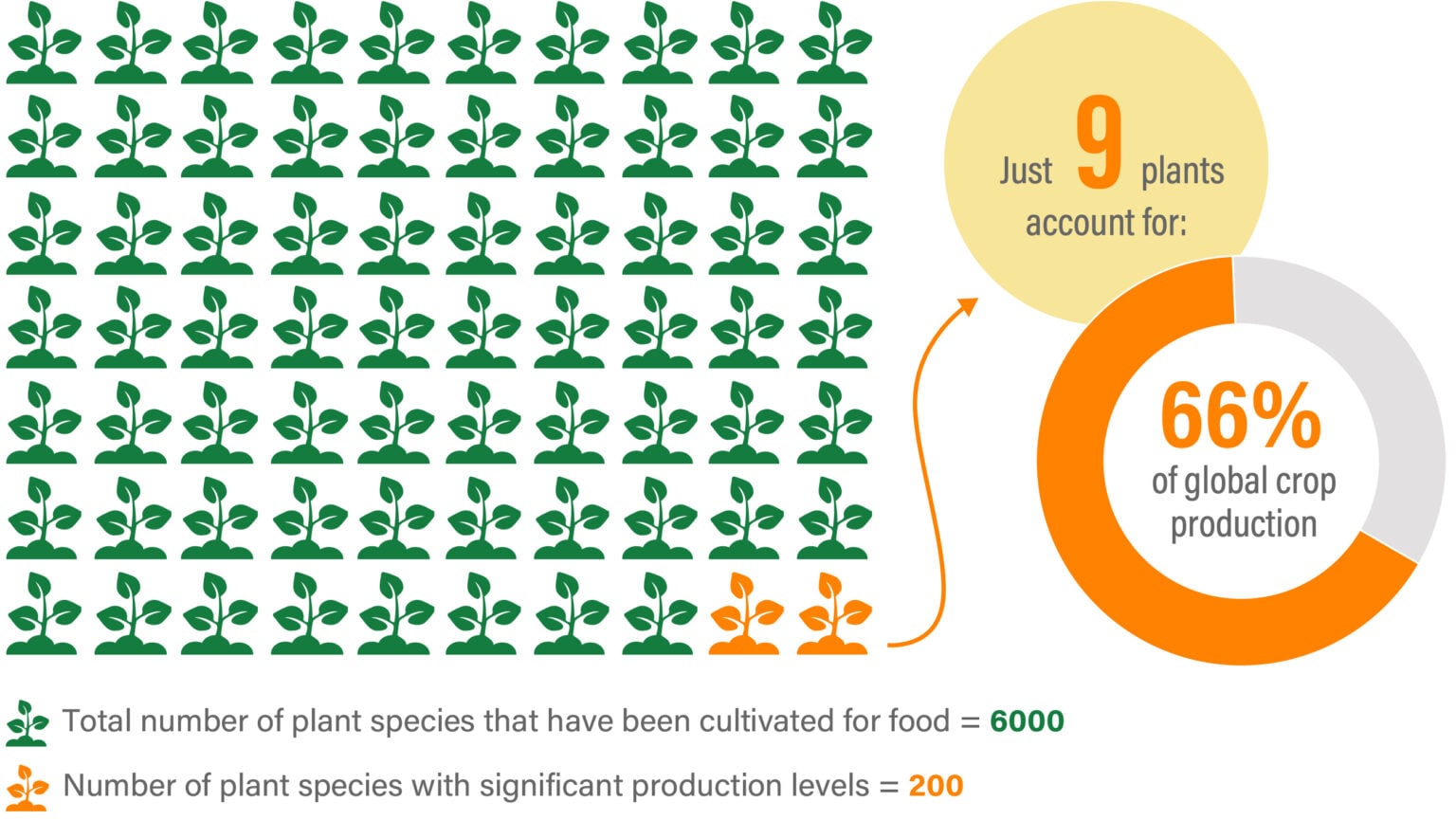
While our food systems are highly dependent on the services provided by nature and biodiversity, they can also be major contributors to counteracting biodiversity loss and restoring the natural environment. The global food supply currently relies heavily on a limited number of staple foods, which has major implications for nutrition and food security. Although, historically, more than 6,000 plant species have been cultivated for food, less than 200 species currently make substantial contributions to global food production – and just nine plants account for two-thirds of total crop production.14
Biodiversity within agri-food systems can have multiple benefits for both biodiversity itself and human well-being. Food systems and diets around the world are diverse and often depend on foods available in both local regions and other parts of the world. To improve food security, a large diversity of plants is needed, since combining a wide variety of different (plant-based) foods can improve nutrient supply. A positive link has been shown between crop diversity and improved dietary diversity and reduced hidden hunger.15 (Hidden hunger is a form of malnutrition resulting from a lack of essential micronutrients in a person’s diet even though enough calories are being consumed.)
A small number of crop species provide the majority of our food
Key takeaways: what policymakers should do
As governments prepare to discuss progress towards achieving the 2030 and 2050 Targets of the Kunming-Montreal Global Biodiversity Framework (KMGBF) at COP17 in Yerevan, ProVeg International calls on policymakers to act on six fronts:
1
Transitioning to Food-Systems-Based Dietary Guidelines with Quantified Targets
Under GBF Target 16, Parties committed to enabling sustainable consumption choices to reduce overconsumption and food waste. Because animal-sourced food production is highly land-intensive, shifting dietary patterns toward plant-rich diets dramatically relieves pressure on agricultural lands, allowing for ecosystem conservation, restoration, and maintenance.
- Policy Demand: Policymakers must update Food-Based Dietary Guidelines (FBDGs) into Food-Systems-Based Dietary Guidelines (FSBDGs) that include explicit, quantified recommendations for increasing the intake of plant-based protein sources and alternatives while reducing animal-based foods.
- KMGBF Target Alignment: By embedding these guidelines into national policy, governments contribute directly to Target 16 (Sustainable Consumption) by lowering consumption footprints, Target 10 (Sustainable Production) by reducing land expansion pressure, and Target 14 (Mainstreaming Biodiversity) by aligning public health frameworks with environmental governance.
2
Sourcing via Sustainable Public Procurement & School Meals
Sourcing food for public institutions, schools, and canteens from local, organic, or agroecological systems provides a high-leverage demand lever that drives sustainable agricultural transitions at scale. By establishing a reliable market for farming methods that protect insect and soil biodiversity and minimize chemical runoff, public procurement actively reshapes regional food systems.
- Policy Demand: Governments must move beyond voluntary guidelines to mandate sustainable procurement criteria in public institutions, prioritizing plant-based choices, establishing plant-based default menus, setting minimum plant-rich quotas, and favoring low-impact production systems across all public catering.
- KMGBF Target Alignment: By mandating these procurement standards, state institutions contribute directly to Target 16 (Sustainable Consumption) by shaping healthy food environments, Target 10 (Sustainable Production) by guaranteeing structured demand for low-impact producers, and Target 14 (Mainstreaming Biodiversity) by embedding nature goals into public education, health, and state spending.
3
Directing Financial Signals via Price Alignment and Ring-Fencing Research for Diversified Crops
Aligning food prices with their true ecological costs discourages the consumption of highly land- and resource-intensive foods.
- Policy Demand: Governments must execute a dual fiscal and innovation strategy that makes healthy, low-impact diets economically accessible while building supply-side resilience. This requires introducing fiscal incentives (e.g. eliminating or reducing Value-Added Tax (VAT)) on whole plant foods, complemented by ring-fenced public research funding dedicated to diversifying staple and protein crops.
- KMGBF Target Alignment: By executing these fiscal reforms and research earmarks, governments contribute directly to Target 18 (Harmful Incentives) and Target 20 (Technical & Scientific Cooperation), while advancing Target 14 (Mainstreaming Biodiversity) by integrating ecological externalities directly into national tax systems and research agendas.
4
Incentivizing Agrobiodiversity in Social Protection
Standard social safety net programs frequently reinforce monocultural farming by relying on a narrow set of staple crops, which exhausts soil health and degrades ecosystems.
- Policy Demand: Policymakers must integrate “Minimum Dietary Diversity” standards into cash and food transfer programs. Explicitly incentivizing the purchase of diverse plant proteins, pulses, and local underutilized crops creates guaranteed markets for farmers, promoting resilient cropping systems that restore soil health, reduce synthetic fertilizer reliance, and promote overall agrobiodiversity.
- KMGBF Target Alignment: By incorporating these social protection criteria, policymakers contribute directly to Target 10 (Sustainable Production) by restoring soil microbiology and reducing fertilizer runoff, while fulfilling Target 14 (Mainstreaming Biodiversity) by embedding nature goals into social welfare schemes and environmental planning.
5
Reforming and Repurposing Harmful Subsidies
Under GBF Target 18, parties have committed to reducing harmful incentives by at least USD 500 billion per year by 2030. A multi-agency UN study analyzing 88 countries found that approximately 87% of agricultural support is categorized as ‘price-distorting and largely harmful to the environment’.18 Subsidies promoting livestock (such as beef and dairy) and monoculture feed crops (like soy and corn) directly drive agricultural expansion, forest encroachment, and habitat conversion in high-risk ecosystems.
- Policy Demand: Governments must decouple producer support from intensive livestock and redirect these financial flows toward nature-positive production, such as agroecology, agroforestry, crop diversification, and the production of fruits, vegetables, and plant-based proteins.
- KMGBF Target Alignment: By executing these subsidy reforms, governments contribute directly to Target 18 (Harmful Incentives) by delivering the committed redirection of at least $500 billion per year in destructive support, while fulfilling Target 14 (Mainstreaming Biodiversity) by embedding biodiversity criteria into core agricultural finance.
6
Upholding Deforestation-Free Trade Rules and Conditionality
Domestic progress on biodiversity targets will be severely undermined if agricultural land expansion is offshored through international trade value chains.
- Policy Demand: Governments must enforce strict, non-negotiable deforestation-free trade regulations globally and condition all new and renegotiated bilateral and multilateral trade agreements on binding, verifiable environmental safeguards — paired with dedicated financing, technical capacity support, and reasonable transition periods for producer countries.
- KMGBF Target Alignment: By enforcing these trade conditions and safeguards, governments contribute directly to Target 15 (Business & Supply Chains) and Target 1 (Spatial Planning), while executing Target 14 (Mainstreaming Biodiversity) by aligning international trade policies with global conservation commitments.
DIFFERENTIATED RESPONSIBILITY
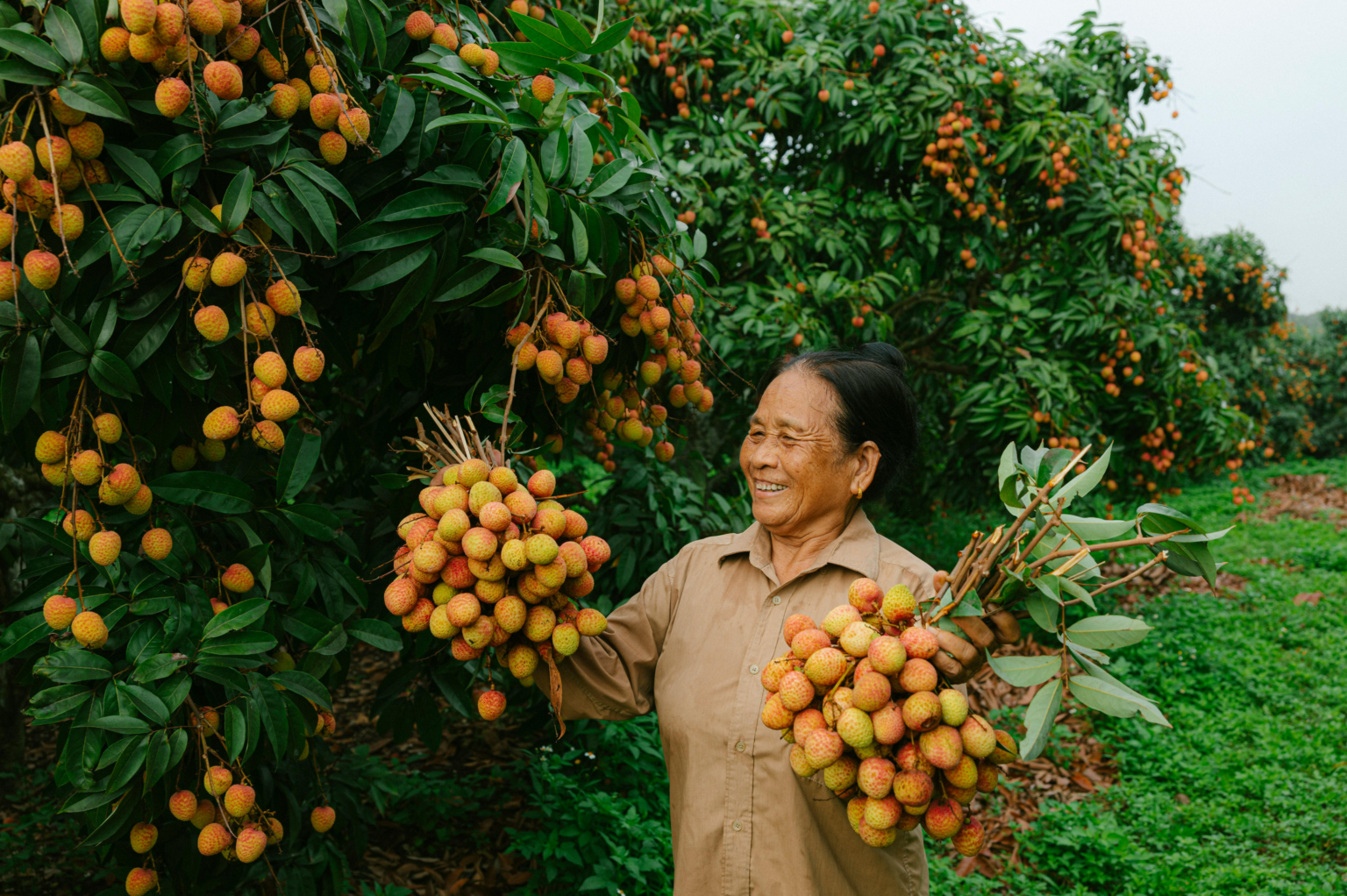
As IPBES notes, shifting towards varied diets with fewer animal products matters particularly in the global North, where consumption footprints are highest. Responsibility for reducing demand sits overwhelmingly with high-consumption countries, rather than with the pastoralist communities, smallholders, and Indigenous Peoples whose traditional food systems and extensive grazing practices can sustain biodiversity rather than erode it.
These recommendations should be implemented accordingly. Procurement standards, subsidy reform and trade measures must be designed with, and not imposed on, Indigenous Peoples and local communities, recognizing their rights, knowledge and leadership in food and land stewardship in line with CBD Article 8(j) and the permanent subsidiary body established at COP16 in Cali. Where measures affect producer countries, they should be matched by finance, capacity support and realistic transition periods.
Kunming-Montreal Global Biodiversity Framework
The Kunming-Montreal Global Biodiversity Framework (GBF) was adopted at COP15, committing 196 governments to halting and reversing biodiversity loss by 2030 through 23 targets.19 Targets 10, 16, and 18 are especially relevant to our food systems, since they aim to:
- Enhance biodiversity and sustainability in agriculture, aquaculture, fisheries, and forestry (Target 10);
- Enable sustainable consumption choices in order to reduce waste and overconsumption (Target 16); and
- Reduce harmful incentives by at least $500 billion a year, and scale up positive incentives for biodiversity (Target 18).
Progress has been slow. At COP16 (Cali, 2024) and the resumed session in Rome (February 2025), governments adopted the first global strategy to finance biodiversity – but by the end of that process, only 44 of 196 parties had submitted revised national biodiversity strategies, even though 119 had registered national targets.20 Governments will take stock of the global progress towards the achievement of the GBF Targets at COP17, to be held in Yerevan, Armenia in 2026 – a critical moment to hold food and agriculture policy to account against the GBF’s 2030 goals.
A shift towards plant-based diets remains one of the biggest levers for reducing the impact of our food systems on biodiversity. This shift is especially urgent in countries with high levels of meat consumption, and where the production of animal-based foods is highly dependent on importing feed from countries most at risk of biodiversity loss.
Frequently asked questions
Although more than 6,000 plant species have historically been cultivated for food, fewer than 200 make substantial contributions today, and just nine plants account for two-thirds (66%) of total crop production. This narrow base leaves food systems vulnerable to shocks.25
Ecosystem services are the benefits nature provides – pollination, healthy soils, nutrient cycling, natural pest control and climate regulation – that agriculture depends on. An estimated $58 trillion, over half (55%) of global GDP, is moderately or highly dependent on nature.26
Adopted at COP15, the Kunming-Montreal Global Biodiversity Framework commits 196 governments to halting and reversing biodiversity loss by 2030 through 23 targets. Targets 10, 16 and 18 – on sustainable agriculture, sustainable consumption and harmful incentives – are especially relevant to food systems.27
ProVeg International calls for action on six fronts: food-systems-based dietary guidelines, sustainable public procurement, price alignment and crop-diversification research, agrobiodiversity in social protection, repurposing harmful subsidies, and deforestation-free trade rules – implemented with Indigenous Peoples and local communities, not imposed on them.
About this brief
This policy brief was developed by ProVeg International. Sources are listed in the footnotes. For more information, contact [email protected].
The graphics in this brief were produced with the assistance of AI and reviewed by ProVeg International.
References
- IPBES (2026): The Methodological Assessment Report on the Impact and Dependence of Business on Biodiversity and Nature’s Contributions to People (Business and Biodiversity Assessment). Rueda X., Jones M., Polasky S. (eds.). IPBES secretariat, Bonn, Germany. doi:10.5281/zenodo.17185116. Citing: Wilting, H. C., A. M. Schipper, M. Bakkenes, et al. (2017): Quantifying biodiversity losses due to human consumption: A global-scale footprint analysis. Environmental Science & Technology 51(6), 3298–3306.
- Liu, B., P. Behrens, Z. Sun & L. Scherer (2026): High-resolution carbon and biodiversity mapping shows correlated losses across space and agricultural products. Nature Food 7, 792–801. doi:10.1038/s43016-026-01387-0
- Ceballos, G., P. R. Ehrlich, A. D. Barnosky, et al. (2015): Accelerated modern human–induced species losses: Entering the sixth mass extinction. Science Advances 1(5), e1400253. doi:10.1126/sciadv.1400253
- FAO (2022): FRA 2020 Remote Sensing Survey. FAO Forestry Paper No. 186. Rome. https://doi.org/10.4060/cb9970en
- IPBES (2026): The Methodological Assessment Report on the Impact and Dependence of Business on Biodiversity and Nature’s Contributions to People (Business and Biodiversity Assessment). Rueda X., Jones M., Polasky S. (eds.). IPBES secretariat, Bonn, Germany. doi:10.5281/zenodo.17185116.
- IPBES (2024): Thematic Assessment Report on the Interlinkages among Biodiversity, Water, Food and Health of the Intergovernmental Science-Policy Platform on Biodiversity and Ecosystem Services. Harrison, P. A., McElwee, P. D., and van Huysen, T. L. (eds.). IPBES secretariat, Bonn, Germany. DOI: https://doi.org/10.5281/zenodo.13850054
- Based on an assessment of search results of threatened species on: IUCN (2026): Red List. Available at: https://www.iucnredlist.org/search [Accessed: 15.07.2026]
- Willett, W., J. Rockström, S. H. Thilsted, et al. (2025): The EAT-Lancet Commission on healthy, sustainable, and just food systems. The Lancet. Available at: https://www.thelancet.com/commissions-do/eat-2025 [Accessed: 15.07.2026]
- World Economic Forum (2026): The Global Risks Report 2026. Available at: https://www.weforum.org/publications/global-risks-report-2026/ [Accessed: 15.07.2026]
- PwC (2023): New research finds 55% of the world’s GDP – equivalent to $58 trillion – is exposed to material nature risk without immediate action; up from $44 trillion (WEF, 2020). Available at: https://www.pwc.com/gx/en/news-room/press-releases/2023/pwcboosts-global-nature-and-biodiversity-capabilities.html [Accessed: 15.07.2026]
- World Economic Forum (2020): Nature Risk Rising: Why the Crisis Engulfing Nature Matters for Business and the Economy. New Nature Economy Report Series, in collaboration with PwC. Available at: https://www.weforum.org/publications/nature-risk-rising-why-the-crisis-engulfing-nature-matters-for-business-and-the-economy/ [Accessed: 11.09.2026]
- IPBES (2026): Summary for Policymakers of the Business and Biodiversity Assessment. IPBES secretariat, Bonn, p. 12 and p. 27.
- Bar-On, Y. M., R. Phillips & R. Milo (2018): The biomass distribution on Earth. Proceedings of the National Academy of Sciences 115(25), 6506–6511. doi:10.1073/pnas.1711842115
- FAO (2019): The State of the World’s Biodiversity for Food and Agriculture, J. Bélanger & D. Pilling (eds.). FAO Commission on Genetic Resources for Food and Agriculture Assessments. Rome. 572 pp.
- Dannenberg, P., B. Braun, C. Greiner, et al. (2024): Eight arguments why biodiversity is important to safeguard food security. PLANTS, PEOPLE, PLANET 6(3), 604–610. doi:10.1002/ppp3.10492
- FAO (2019): The State of the World’s Biodiversity for Food and Agriculture, J. Bélanger & D. Pilling (eds.). FAO Commission on Genetic Resources for Food and Agriculture Assessments. Rome. 572 pp.
- IUCN (n.d.): The legacy of the land – Storymap. Biodiversity in the Mediterranean agricultural landscapes. Available at: https://iucn.org/legacy-land [Accessed: 04.10.2024]
- FAO, UNDP and UNEP (2021): A multi-billion-dollar opportunity – Repurposing agricultural support to transform food systems. Rome, FAO. https://doi.org/10.4060/cb6562en
- Convention on Biological Diversity (2022): Decision Adopted by the Conference of the Parties to the Convention on Biological Diversity. 15/4. Kunming-Montreal Global Biodiversity Framework. Available at: https://www.cbd.int/doc/decisions/cop-15/cop-15-dec-04-en.pdf [16.10.2024]
- Convention on Biological Diversity (2025): Outcomes of COP16 (Cali, 2024) and the resumed session (Rome, February 2025); COP17 to be held in Yerevan, Armenia (2026). Available at: https://www.cbd.int/gbf [Accessed: 15.07.2026]
- IPBES (2026): The Methodological Assessment Report on the Impact and Dependence of Business on Biodiversity and Nature’s Contributions to People (Business and Biodiversity Assessment). Rueda X., Jones M., Polasky S. (eds.). IPBES secretariat, Bonn, Germany. doi:10.5281/zenodo.17185116. Citing: Wilting, H. C., A. M. Schipper, M. Bakkenes, et al. (2017): Quantifying biodiversity losses due to human consumption: A global-scale footprint analysis. Environmental Science & Technology 51(6), 3298–3306.
- Liu, B., P. Behrens, Z. Sun & L. Scherer (2026): High-resolution carbon and biodiversity mapping shows correlated losses across space and agricultural products. Nature Food 7, 792–801. doi:10.1038/s43016-026-01387-0
- FAO (2022): FRA 2020 Remote Sensing Survey. FAO Forestry Paper No. 186. Rome. https://doi.org/10.4060/cb9970en
- Based on an assessment of search results of threatened species on: IUCN (2026): Red List. Available at: https://www.iucnredlist.org/search [Accessed: 15.07.2026]
- FAO (2019): The State of the World’s Biodiversity for Food and Agriculture, J. Bélanger & D. Pilling (eds.). FAO Commission on Genetic Resources for Food and Agriculture Assessments. Rome. 572 pp.
- PwC (2023): New research finds 55% of the world’s GDP – equivalent to $58 trillion – is exposed to material nature risk without immediate action; up from $44 trillion (WEF, 2020). Available at: https://www.pwc.com/gx/en/news-room/press-releases/2023/pwcboosts-global-nature-and-biodiversity-capabilities.html [Accessed: 15.07.2026]
- Convention on Biological Diversity (2022): Decision Adopted by the Conference of the Parties to the Convention on Biological Diversity. 15/4. Kunming-Montreal Global Biodiversity Framework. Available at: https://www.cbd.int/doc/decisions/cop-15/cop-15-dec-04-en.pdf [16.10.2024]