



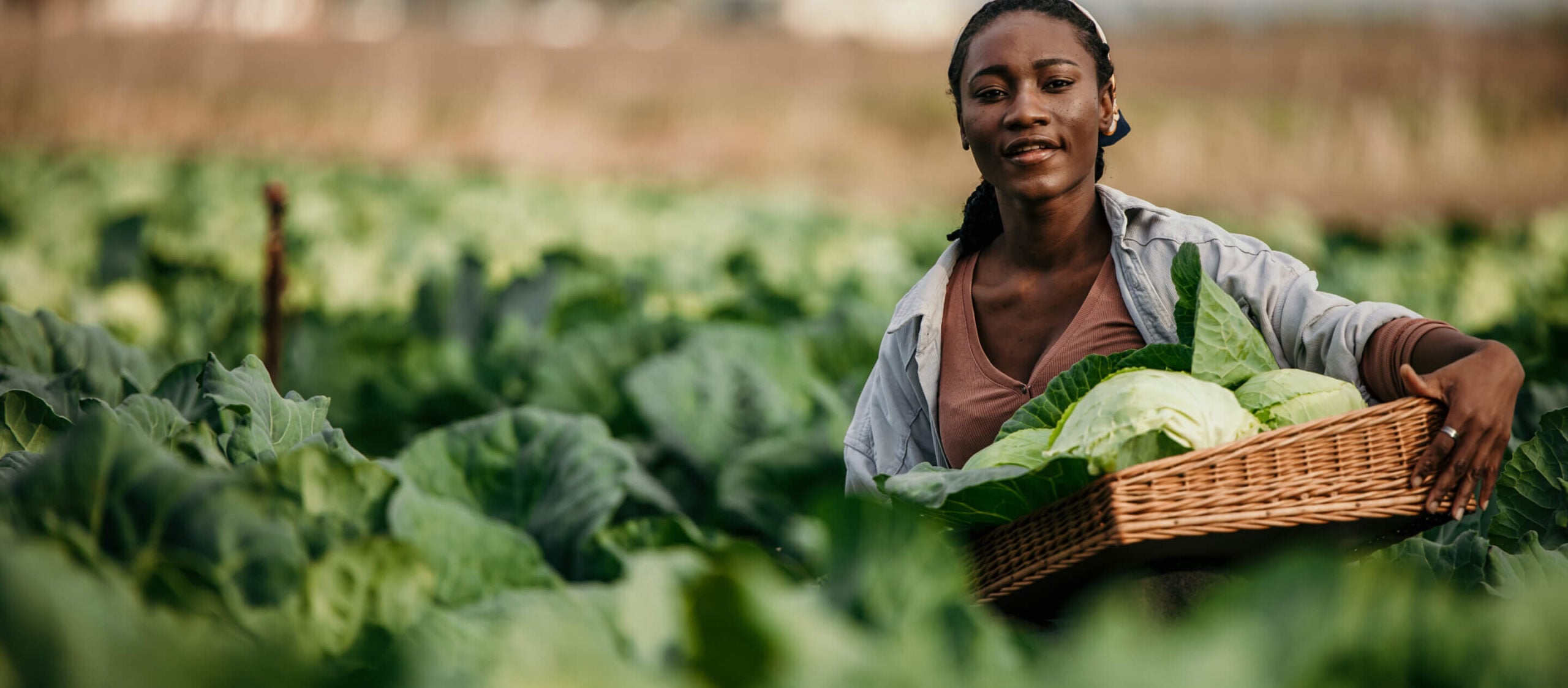
Food is one of the most powerful levers for climate action.
ProVeg International accelerates the global shift toward a plant-rich food system. Through retail and supply chains, public institutions, and the policy frameworks that govern them, we enable coordinated action across the factors that determine what billions of people eat every day.
Food production drives roughly a third of global greenhouse gas emissions, occupies nearly half the world’s habitable land, and is pushing six of nine planetary boundaries past safe limits. Animal agriculture is the dominant contributor across all three. Transitioning to plant-rich food systems is one of the largest climate mitigation opportunities in the food sector, and remains far underfunded relative to its potential. Unlike most climate solutions, it does not require new technology: the solutions already exist. ProVeg provides the data, the policy architecture, the institutional reach, and the local expertise to scale and contextualize them.
UNFCCC Observer Status
UNEP Accredited
Momentum for Change Award Recipient
Why food is the lever — and why action is overdue.
~30%
Global GHG Emissions
Attributable to the global food system, with animal agriculture as a primary driver.
32%
Human-made Methane
Sourced from livestock production; a critical target for rapid short-term cooling.
~50%
Habitable Land Use
Dedicated to animal feed and grazing, driving deforestation and habitat loss.
6 of 9
Planetary Boundaries
Currently breached, with food production being the single largest contributor to the crisis.
Our current dietary patterns are pushing Earth beyond safe limits
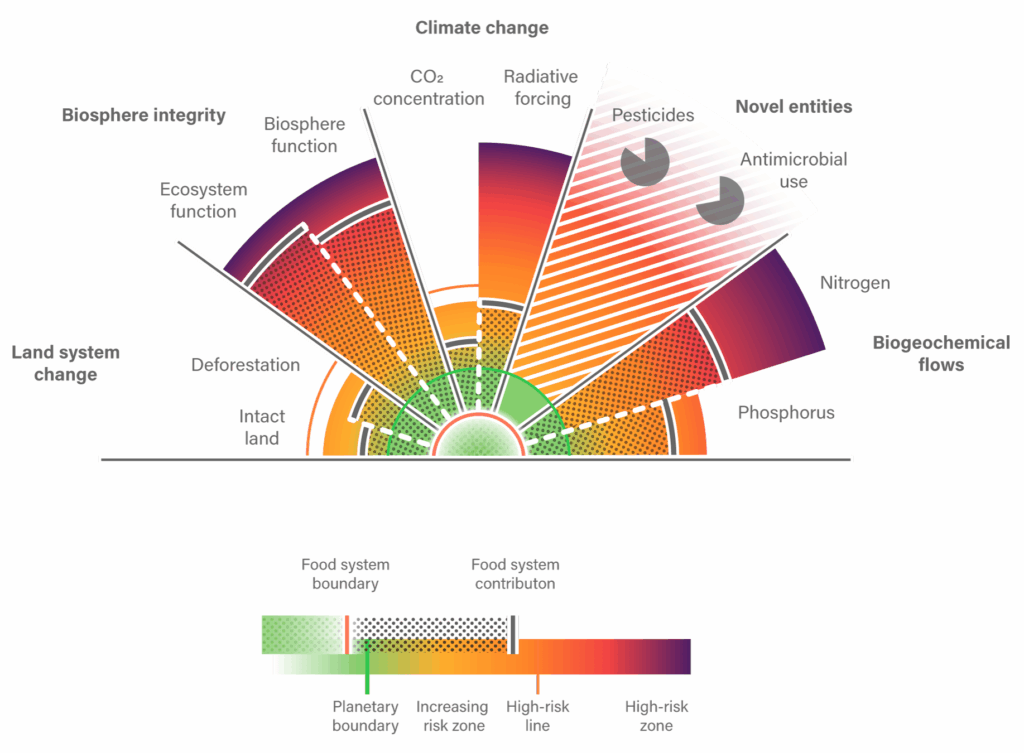
The dominant dietary patterns in many countries are contributing to pressures that exceed Earth’s ecological limits. Scientists describe these ecological limits through the planetary boundaries framework, which are scientifically defined, interdependent guardrails that ensure the Earth’s health. The framework includes boundaries for climate change, biosphere integrity, freshwater change, and ocean acidification alongside other measures. Today, food production contributes to the crossing of six of these boundaries, making it one of the most significant pressures on Earth’s life-support systems, with animal agriculture playing a central role.12
We are off track for 1.5°C
The global food system is a major driver of climate change, generating approximately 30% of global greenhouse gas emissions. Animal-based foods are responsible for up to 20% of all human-made greenhouse gas emissions. GHG emissions from animal-based foods are twice that of plant-based foods, and if animal-based foods were a country, they would be the second-largest emitter, just below China and above the USA.3456 We cannot solve the problem of climate change unless we also address the problem of food.
More than CO₂ — methane is a neglected problem
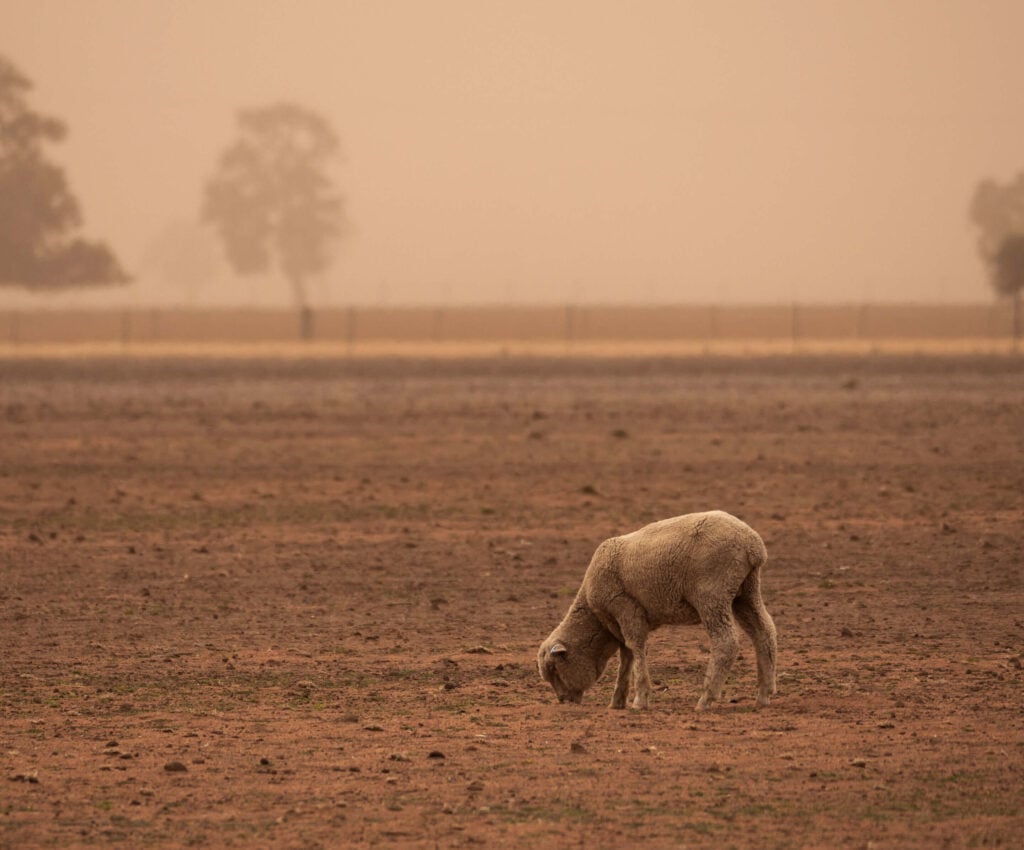
Methane is a powerful driver of climate change and contributes to ground-level ozone pollution, which is associated with around one million premature respiratory deaths globally each year.78 Farmed animals are responsible for 32% of global human-made methane emissions,9 and reducing methane emissions from animal agriculture is one of the quickest and most effective ways to mitigate or even drastically reduce global warming. Because methane breaks down more quickly than carbon dioxide, cuts made today can deliver near-term climate benefits.10 If the production of farmed animals were a country, it would rank first in methane emissions — emitting as much methane as China, India, and the United States combined.
Farmed-animals are responsible for
As methane is a short-lived greenhouse gas reducing the methane emissions from animal agriculture is one of the quickest and most effective ways to mitigate or even drastically reduce global warming. It can provide short-term relief and buy us time for transition processes in other sectors such as energy and transportation.12

Agriculture’s role in biodiversity loss and deforestation
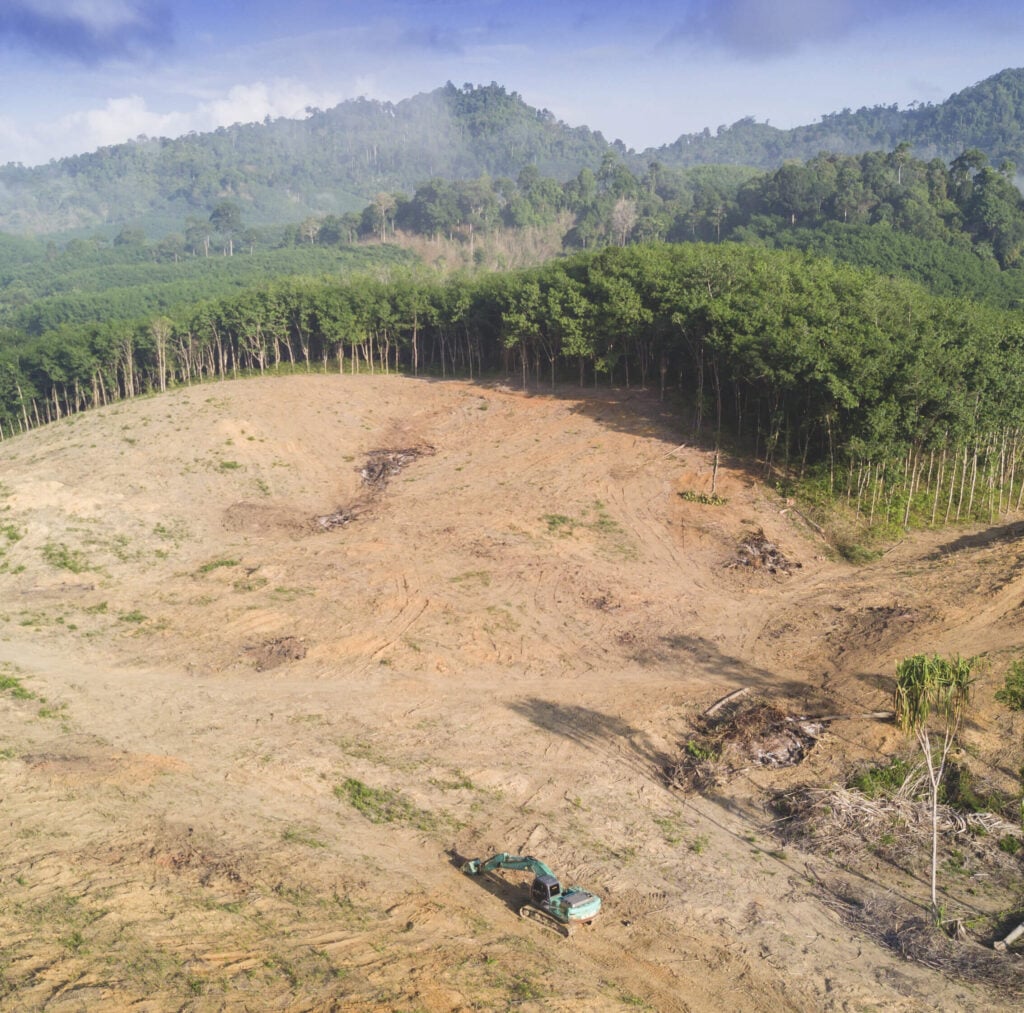
Agriculture is one of the biggest drivers of deforestation and biodiversity loss. Half of the habitable land on Earth is used for agriculture and 80% of that agricultural land is used for farmed animals. However, animal-based foods only provide 18% of global calories.16171819 At the same time, agriculture is listed as a risk to more than half of the species at risk of extinction,20 and globally, 41% of tropical deforestation is driven by beef production. That is 2.1 million hectares per year – about the size of Slovenia.2122 What we eat can have a bigger impact on land use than how much we eat. Reducing our reliance on animal agriculture and instead growing crops for direct human consumption can increase efficiency and food security while yielding positive benefits to nature and biodiversity.
The opportunity:
change can happen fast
Unlike other sectors, transforming the food system does not require unproven technological breakthroughs. The solutions already exist in plant-based and cultivated alternatives. Substituting just 50% of animal products with plant-based alternatives globally would halve emissions and reduce land use by 31%.23 A shift toward plant-based diets — among those currently following high animal-product-consumption diets — could free up land equivalent to the size of Africa for ecosystem restoration and carbon sequestration.24 What is needed is coordinated action across policy, markets, producers, and public norms — to contextualize and scale the solutions that already work, remove the barriers that hold them back, and shift demand at the scale climate stability requires.
Read more about the food system challenge and the evidence base behind every claim above, including in-depth articles on climate change, methane emissions, land use, deforestation, biodiversity, water use, and resource efficiency.
Sources
- Te Wierik, S., F. DeClerck, A. Beusen, et al. (2025): Identifying the safe operating space for food systems. Nature Food doi:10.1038/s43016-025-01252-6 doi:10.1038/s43016-025-01252-6 ↩︎
- Rockström, J., S. H. Thilsted, W. C. Willett, et al. (2025): The EAT–Lancet Commission on healthy, sustainable, and just food systems. The Lancet 406(10512), 1625–1700. doi:10.1016/S0140-6736(25)01201-2 ↩︎
- Clark, M. A., N. G. G. Domingo, et al. (2020): Global food system emissions could preclude achieving the 1.5° and 2°C climate change targets. Science 370(6517), 705–708. ↩︎
- Xu, X., P. Sharma, et al. (2021): Global greenhouse gas emissions from animal-based foods are twice those of plant-based foods. Nature Food 2(9), 724–732. ↩︎
- The Breakthrough Institute (2023): Livestock Don’t Contribute 14.5% of Global Greenhouse Gas Emissions. Available at: https://thebreakthrough.org/issues/food-agriculture-environment/livestock-dont-contribute-14-5-of-global-greenhouse-gas-emissions [Accessed: 30.10.2023]. ↩︎
- Emissions referenced include direct and indirect emissions ↩︎
- Climate & Clean Air Coalition (2017): One million premature deaths linked to ozone air pollution. Available at: https://www.ccacoalition.org/news/one-million-premature-deaths-linked-ozone-air-pollution. ↩︎
- Rockström, J., S. H. Thilsted, W. C. Willett, et al. (2025): The EAT–Lancet Commission on healthy, sustainable, and just food systems. The Lancet 406(10512), 1625–1700. doi:10.1016/S0140-6736(25)01201-2 ↩︎
- United Nations Environment Programme & Climate and Clean Air Coalition (2021): Global Methane Assessment: Benefits and Costs of Mitigating Methane Emissions. UNEP, Nairobi. ↩︎
- Nature (2021): Control methane to slow global warming — fast. Nature 596(7873), 461–461. ↩︎
- United Nations Environment Programme & Climate and Clean Air Coalition (2021): Global Methane Assessment: Benefits and Costs of Mitigating Methane Emissions. United Nations Environment Programme, Nairobi ↩︎
- Nature (2021): Control methane to slow global warming — fast. Nature 596(7873), 461–461. ↩︎
- United Nations Environment Programme & Climate and Clean Air Coalition (2021): Global Methane Assessment: Benefits and Costs of Mitigating Methane Emissions. United Nations Environment Programme, Nairobi ↩︎
- Jones, M. W., G. P. Peters, T. Gasser, et al. (2023): National contributions to climate change due to historical emissions of carbon dioxide, methane, and nitrous oxide since 1850. Scientific Data 10(1), Springer Science and Business Media LLC, doi:10.1038/s41597-023-02041-1 ↩︎
- Jones, M. W., G. P. Peters, T. Gasser, et al. (2023): National contributions to climate change due to historical emissions of carbon dioxide, methane, and nitrous oxide [Data set]. Scientific Data (2024.2, Bd. 10, Nummer 155). Zenodo. ↩︎
- Poore, J. & T. Nemecek (2018): Reducing food’s environmental impacts through producers and consumers. Science 360(6392), 987–992. Doi:10.1126/science.aaq0216. ↩︎
- Ritchie, H. & M. Roser (2024): Half of the world’s habitable land is used for agriculture. Available at: https://ourworldindata.org/global-land-for-agriculture [Accessed: 04.10.2024] ↩︎
- United Nations Environment Programme (2023): Frontiers 2023. What’s Cooking? An assessment of the potential impacts of selected novel alternatives to conventional animal products. Nairobi. https://doi.org/10.59117/20.500.11822/44236. ↩︎
- Poore, J. & T. Nemecek (2018): Reducing food’s environmental impacts through producers and consumers. Science 360(6392), 987–992. Doi:10.1126/science.aaq0216.rg/10.59117/20.500.11822/44236. ↩︎
- Based on an assessment of threatened species on: IUCN (2025): Red list. Available at: https://www.iucnredlist.org/search [Accessed: 22.05.2025]. ↩︎
- Pendrill, F., U. M. Persson, J. Godar, et al. (2019): Agricultural and forestry trade drives large share of tropical deforestation emissions. Global Environmental Change 56 1–10. doi:10.1016/j.gloenvcha.2019.03.002 ↩︎
- Ritchie, H. and M. Roser (2021): Forests and Deforestation. OurWorldInData.org. Available at: https://ourworldindata.org/forests-and-deforestation [Accessed: 23.11.2022] ↩︎
- Kozicka, M., Havlík, P., Valin, H., Wollenberg, E., Deppermann, A., Leclère, D., Lauri, P., Moses, R., Boere, E., Frank, S., Davis, C., Park, E., Gurwick, N. (2023). Feeding climate and biodiversity goals with novel plant-based meat and milk alternatives. Nature Communications DOI: 10.1038/s41467-023-40899-2 ↩︎
- Chatzimpiros, P. & S. Harchaoui (2023): Sustainable food provisioning: how much can we expect from agricultural land savings under widespread adoption of healthy and sustainable diets? ↩︎
Three global programs. One coordinated transition.
ProVeg drives change where food decisions actually get made: in the public institutions that feed millions every day, in the policy frameworks that shape supply chains, and in the retail and food-service companies that determine what’s on the shelf.
Public Food Programme
Reshaping institutional food environments at scale

Every day, schools, universities, and hospitals serve meals to hundreds of millions of people worldwide. The scale is vast, yet historically these systems have not been designed with clear goals around health, climate, or social equity. ProVeg’s Public Food Programme works with these institutions to increase the proportion of plant-based and plant-rich meals served — and to make plant-based defaults the norm.
Food choices are largely shaped by what is offered, how it is presented, and what kitchen teams are equipped to prepare. By improving these conditions — through menu redesign, chef training, procurement policy, and stakeholder engagement — it becomes possible to influence dietary patterns at scale, without relying on individual behavior change alone. Not only does implementing plant-based defaults in public food settings increase the number of people eating climate-friendly meals, it also lowers the climate impact of the food-service provider, with studies reporting between
20–40% emissions reductions.
Since 2018, the program has supported thousands of schools, universities, and hospitals to replace animal-based meals with plant-based alternatives, and in 2025 alone, we reached over 2 million diners.
Plant-Rich Policy Programme
Embedding plant-rich diets in national, EU, and UN policy
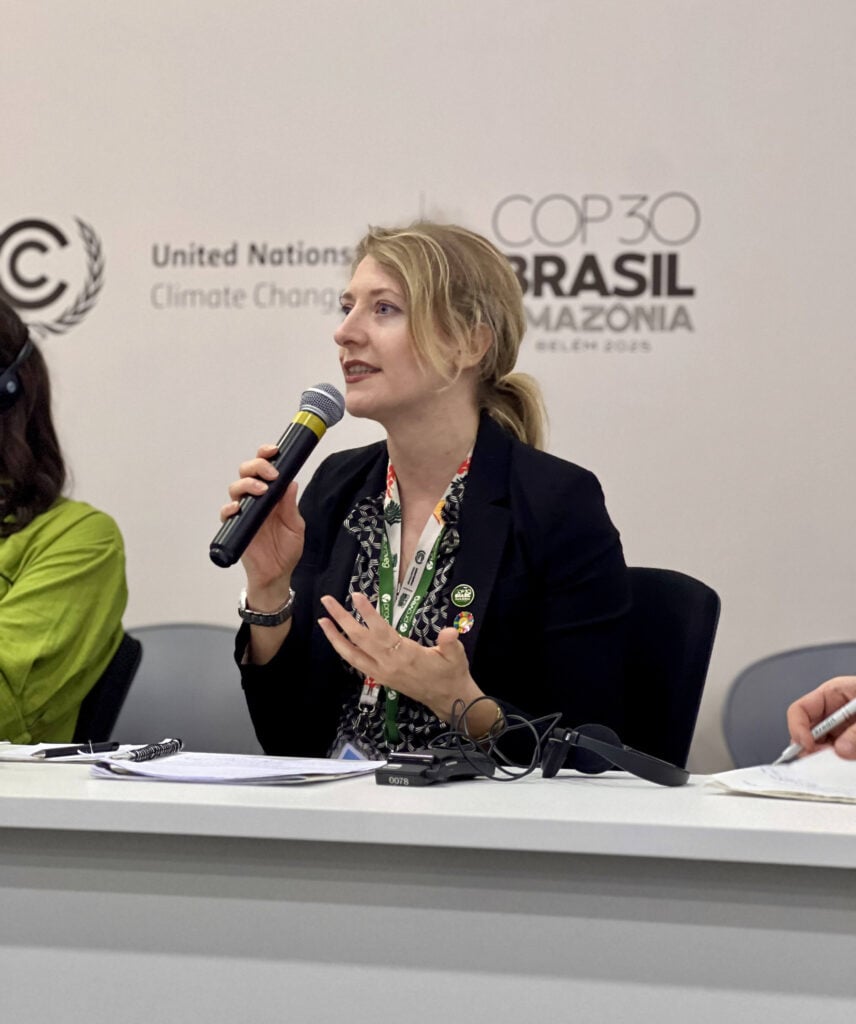
Policy reform is one of the highest impact interventions we have to positively alter the food system: a single regulatory change can influence billions in public spending and private capital. ProVeg’s Plant-Rich Policy Programme works to embed plant-rich food systems into national strategies,
EU procurement frameworks, climate plans, and UN processes —
creating the structural conditions under which markets, institutions,
and producers can move together.
ProVeg holds Permanent Observer Status with the UNFCCC, special consultative status with ECOSOC, and is accredited for the UN Environment Assembly. We co-drafted the Belém Declaration on Plant-Rich Diets, signed by 122 organizations and policymakers, and have contributed directly to national policies in Portugal (Revised National Energy and Climate Plan), Germany (Federal Protein Strategy), Poland (2050 National Development Concept), and many more across the EU and globally.
In 2025, 41 high-level policymakers publicly endorsed ProVeg’s recommendations and 25 national, EU, and UN policy documents referenced our policy asks.
Corporate Protein Transition Programme
Shifting retail and food-service supply chains toward plant-rich diets

Retail and food service determine what protein billions of people consume day-to-day. Yet most companies have no standardized methodology for measuring the plant-to-animal protein ratio of their sales — and therefore no way to set, track, or report on protein-shift commitments aligned with climate targets. ProVeg’s Corporate Protein Transition Programme closes that gap, working with major retailers and food-service operators in Europe through a Target → Measure → Act strategy: setting ambitious, time-bound protein-balance targets, measuring and disclosing progress, and designing implementation roadmaps for change at scale.
Our Protein Tracker — developed in partnership with the Green Protein Alliance — provides a standardized, retailer-level methodology for measuring plant-to-animal protein sales. In the Netherlands, where ProVeg has supported retailer adoption, participating retailers representing 95% of the Dutch market have committed to ensuring that at least 60% of protein sales will be plant-based by 2030.
Diverse, Collaborative, and Global
While our three global programs guide a majority of our work, we realize that every country, culture, and region is unique. Which is why we have established offices in 14 countries around the world, led by local experts and partnering with diverse stakeholders from across the value chain. We recognize that an intervention that works in one region may not be suited to another. We intentionally leave room for flexibility and adaptability across our programmatic work. This allows us to implement culturally relevant approaches. This looks like providing comprehensive technical support to transition farmers to plant production and agroforestry in Brazil, building coalitions in Portugal to embed agroecological legume production in national climate policy, and in China, accelerating NeoProtein ecosystem development through cross-sector collaboration.
Our Impact.
Across our programs and countries we track tangible outputs and outcomes that build the foundation for system-level change. We are developing and refining the tools and frameworks to track key data and analyze effectiveness of programs, understanding the mechanisms that make them successful and their relative cost-effectiveness.
Outputs
Institutional meal transitions
72 million meals swapped.
At least 72 million animal-based meals swapped to plant-based alternatives across schools, universities, and hospitals since 2018.
Retail protein shift
42.6% plant-based protein sales.
The Protein Tracker provides standardized measurement of plant-to-animal protein sales ratios at retailer level — including verified shifts in major markets such as the Netherlands, where 42.6% of protein sales in participating supermarket chains in the Netherlands were plant-based in 2025.
Policy outcomes
ProVeg has been a key voice in supporting critical legislative wins
including the Belém Declaration on Plant-Rich Diets, Portugal’s Revised National Energy and Climate Plan, Poland’s mandate for one weekly plant-based school meal from 2026, Germany’s Federal Protein Strategy, and many more.
Movement Building
1,130 grants distributed
to organizations across 97 countries since 2019, paving the way for locally led, culturally relevant food-system transformation.
Outcomes
GHG emissions avoidance
Cumulative CO₂ emissions avoided
as a result of key interventions including plant-based meal swaps and retail protein target commitments.
Water and land use
Water saved and land spared
as a result of the adoption of structural shifts from meat-based to plant-based alternatives across institutions and geographies.
Join us.
The case for food system transformation is clear. We know that shifting towards plant-rich diets is one of the most effective ways to combat the myriad challenges we face, including climate change, land-use pressures, water scarcity, public health, and food insecurity. Join us as we shift global supply and demand to accelerate the transition toward a food system that is good for people, animals, and the planet.
Latest updates and news

Plant-based is growing up. SIAL Paris’s Jean-Gabriel Mollard explains what that means
Ahead of the world’s leading food trade show, the Acting Director of SIAL Paris explains why scale, cross-industry…

From Nairobi to Yerevan: Putting Food Systems at the Heart of Global Biodiversity Action
ProVeg International takes the food systems transformation agenda to SBI-7, building momentum towards COP17 The…

Why the next phase of plant-based retail success is about activation, not availability
New report shows how retailers can unlock commercial growth by turning availability into stronger shopper…
Frequently asked questions
How much of global greenhouse gas emissions come from the food system?
Food production drives roughly a third (around 30%) of global greenhouse gas emissions, with animal agriculture as the dominant contributor. It also occupies nearly half the world’s habitable land. Shifting to plant-rich food systems is one of the largest — and most underfunded — climate mitigation opportunities in the food sector.
Why is changing what we eat one of the most powerful levers for climate action?
Because food drives about 30% of global emissions and animal agriculture is the biggest contributor, shifting diets is one of the largest climate levers available. Unlike most solutions it needs no new technology — plant-based and cultivated alternatives already exist. What’s needed is coordinated action across policy, markets and public norms.
How much of global methane comes from farmed animals?
Farmed animals are responsible for 32% of global human-made methane emissions. Because methane is a short-lived but powerful greenhouse gas, cutting emissions from animal agriculture is one of the quickest and most effective ways to slow global warming, delivering near-term climate benefits while other sectors decarbonise.
Why is cutting methane from animal agriculture one of the fastest ways to slow global warming?
Methane breaks down far faster than CO₂, so reducing it delivers near-term cooling and buys time for slower transitions in energy and transport. Farmed animals produce 32% of human-made methane — if farmed-animal production were a country, it would rank first for methane, emitting as much as China, India and the US combined.
How much of the world’s habitable land is used for animal agriculture, and how many calories does it provide?
Around half of Earth’s habitable land is used for agriculture, and 80% of that farmland is used for farmed animals — yet animal-based foods provide only 18% of global calories. Growing crops for direct human consumption is far more efficient and benefits food security, nature and biodiversity.
How much does animal agriculture contribute to deforestation and biodiversity loss?
Agriculture is among the biggest drivers of deforestation and biodiversity loss, and is listed as a risk to over half of species threatened with extinction. Globally, 41% of tropical deforestation is driven by beef production — about 2.1 million hectares a year, roughly the size of Slovenia.
What would happen to emissions and land use if we replaced half of animal products with plant-based alternatives?
Substituting just 50% of animal products with plant-based alternatives globally would halve food-system emissions and cut land use by 31%. A wider shift away from high animal-product diets could free up land equivalent to the size of Africa for ecosystem restoration and carbon sequestration.
How many of the nine planetary boundaries has the food system pushed past safe limits?
Food production contributes to the crossing of six of the nine planetary boundaries — the scientifically defined guardrails for a stable Earth system — making it one of the largest pressures on the planet’s life-support systems, with animal agriculture playing a central role.
What are ProVeg’s three global programs for transforming the food system?
ProVeg runs three coordinated global programs: the Public Food Programme (plant-rich meals in schools, universities and hospitals), the Plant-Rich Policy Programme (embedding plant-rich diets in national, EU and UN policy), and the Corporate Protein Transition Programme (shifting retail and food-service supply chains toward plant-based protein).
What is ProVeg’s Public Food Programme and how many diners has it reached?
The Public Food Programme works with schools, universities and hospitals to increase plant-based meals through menu redesign, chef training and procurement policy. Since 2018 it has supported thousands of institutions, and in 2025 alone reached over 2 million diners. Studies report 20–40% emissions reductions from these shifts.
What is the Corporate Protein Transition Programme and the Protein Tracker?
The Corporate Protein Transition Programme helps retailers and food-service operators shift toward plant-based protein using a Target–Measure–Act strategy. Its Protein Tracker, built with the Green Protein Alliance, measures the plant-to-animal protein ratio of sales. In the Netherlands, retailers representing 95% of the market have committed to 60% plant-based protein by 2030.
What is ProVeg’s Plant-Rich Policy Program?
This program embeds plant-rich food systems into national strategies, EU procurement frameworks, climate plans and UN processes. ProVeg holds UNFCCC Observer Status and co-drafted the Belém Declaration, signed by 122 organizations. It has contributed to national policies in Portugal, Germany, Poland and beyond.
How many animal-based meals has ProVeg helped swap to plant-based since 2018?
At least 72 million animal-based meals have been swapped to plant-based alternatives across schools, universities and hospitals since 2018.
Does ProVeg hold official status with UN climate and environment bodies?
Yes. ProVeg holds observer status with the UNFCCC, special consultative status with the UN’s Economic and Social Council (ECOSOC), and is accredited for the UN Environment Assembly. It is also a UN Momentum for Change award recipient.