

New report recommends a shift to 85% plant-based public food budgets
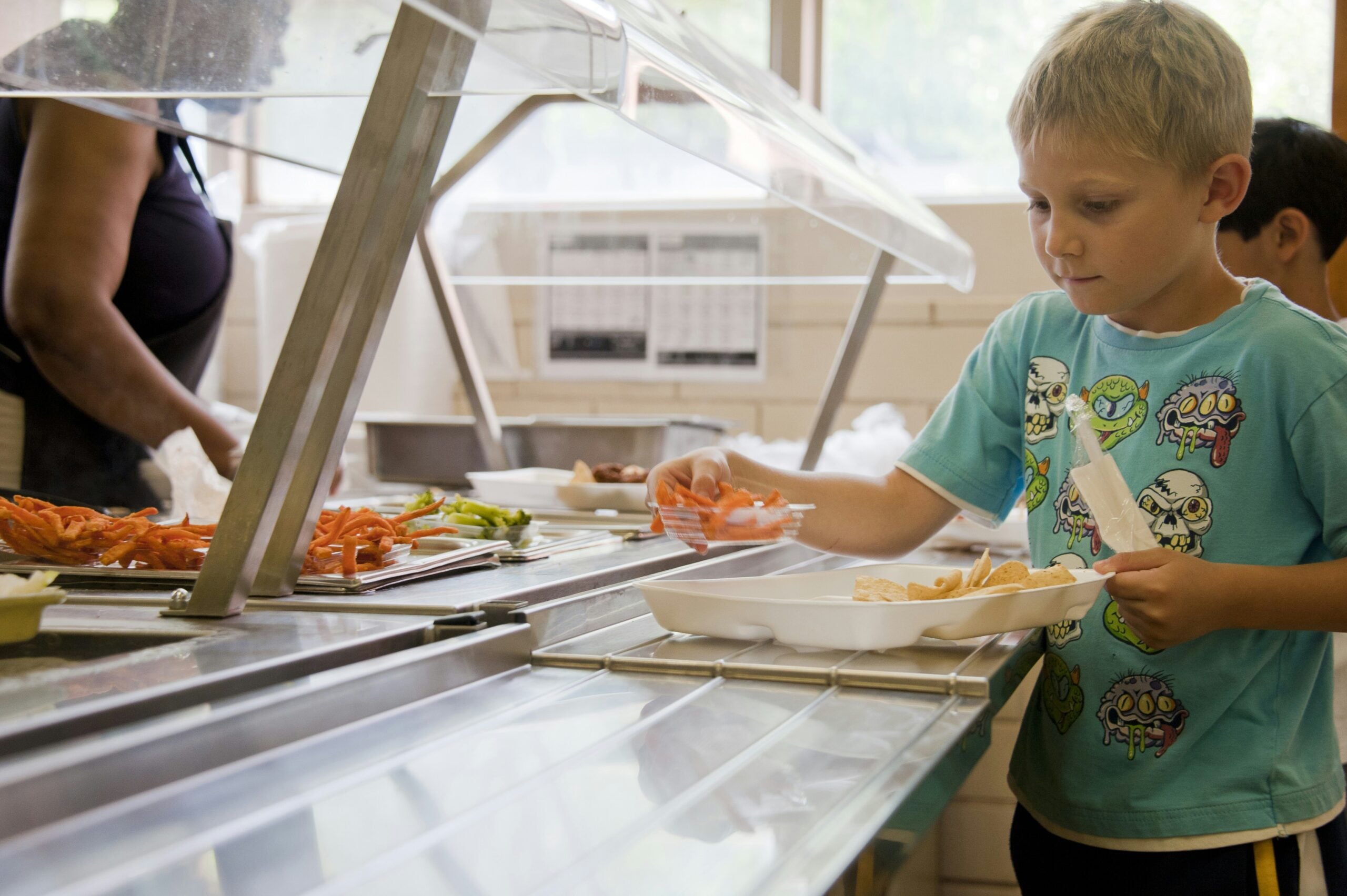
Every day, Europe’s public institutions serve millions of meals in schools, hospitals, care homes, universities, military facilities, and prisons. Together, they spend around €45.8 billion annually on food.
But what if public food budgets could do more than simply buy meals?
New modeling commissioned by ProVeg International and conducted by Bryant Research suggests that smarter public food purchasing could become one of Europe’s most powerful, and overlooked, tools for strengthening resilience, improving public health, and delivering better value for taxpayers.
Key finding: an 85% plant-forward allocation could unlock €11.61 billion annually
The report, The €11 billion opportunity: unlocking the economic potential of plant-forward public food procurement in the EU, modeled three procurement scenarios across all 27 EU Member States. Under the most ambitious scenario, allocating 85% of public food procurement budgets to plant-source foods, the EU could generate €11.61 billion per year in combined returns.
That includes:
- €3.16 billion in direct food budget savings
- €4.37 billion in avoided environmental costs
- €4.08 billion in avoided societal health costs
The modeling also estimates annual emissions reductions of 8.89 million tons of CO₂e – equivalent to removing 4.44 million cars from Europe’s roads – while reformed school meal systems could help prevent approximately 396,000 future adult obesity cases across the EU.
Public procurement: a strategic policy lever hiding in plain sight
Public food procurement is often treated as an operational issue. In reality, it shapes outcomes across public spending, health systems, food security, and climate delivery.

The report argues that shifting procurement towards a more plant-forward model offers a practical route to move from lowest-cost purchasing to best-value procurement, accounting for long-term economic, environmental, and health outcomes rather than upfront ingredient costs alone.
It also positions procurement reform as a resilience measure: creating stable demand for EU-grown legumes and vegetables, supporting farmer diversification, reducing reliance on imported protein, and strengthening Europe’s long-term food security.
Five actions to unlock the opportunity
To help capture these benefits, the report recommends five policy priorities:
- Reform EU public procurement rules to reward sustainability and long-term value
- Update the EU School Scheme to include legumes and fortified plant-based drinks
- Invest in skills and training for public catering teams
- Support farmer diversification and domestic protein production
- Use behavioral insights and menu design to make healthier, sustainable choices easier
Why now?
The timing matters.
With the EU’s upcoming review of public procurement rules and wider discussions on competitiveness, food resilience, and agricultural policy underway, public food purchasing represents a ready-to-use lever that can support multiple policy priorities at once.
Read the full report to explore the modeling, country-level insights, and policy recommendations behind Europe’s €11.61 billion opportunity.


Gemma Tadman
Business Communications Manager