


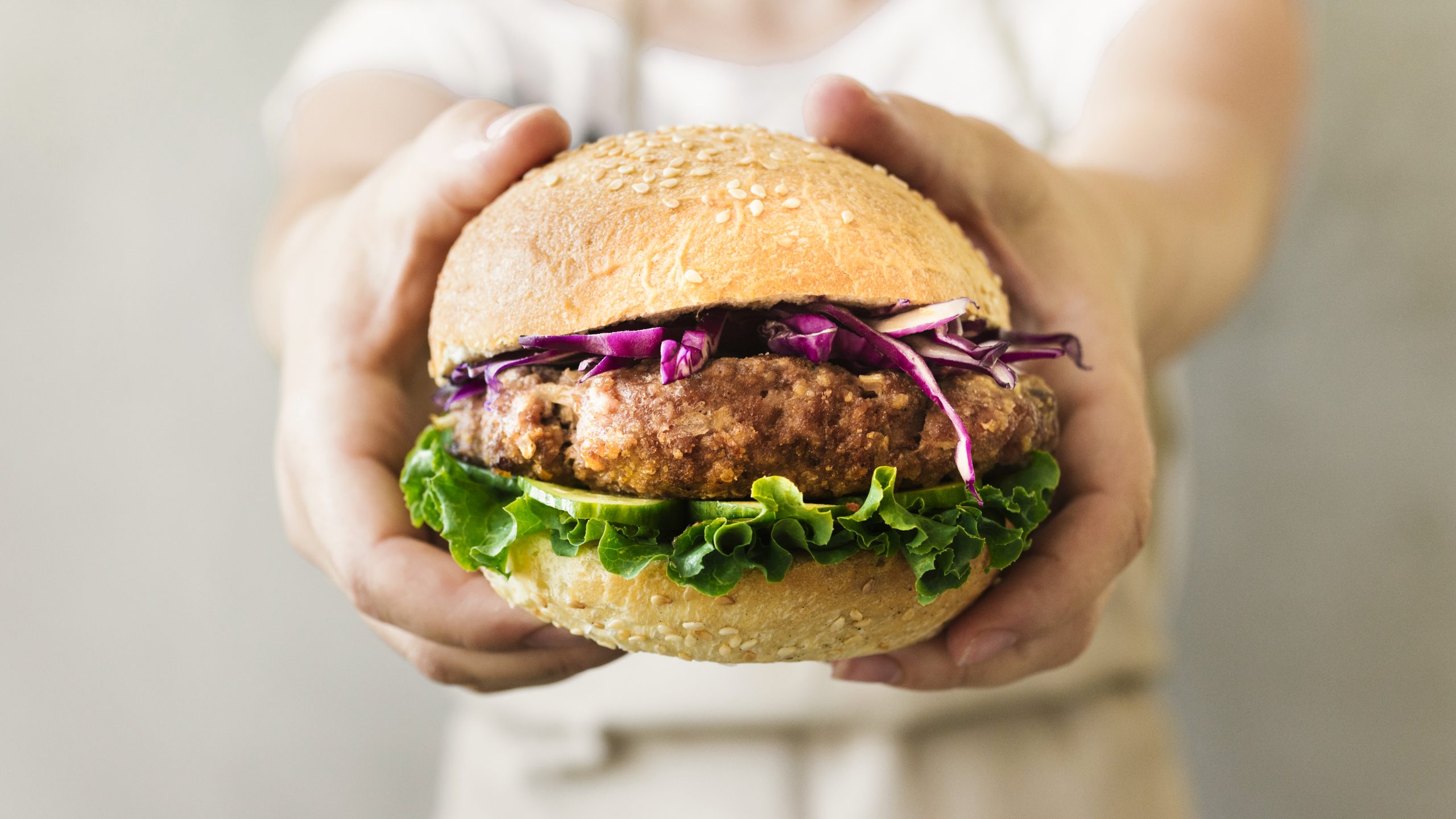
What if buying a veggie sausage suddenly became a political act?
That’s precisely the situation facing European consumers and the EU’s booming plant-based sector. The European Parliament has put forward a deeply worrying amendment that threatens to restrict familiar common-sense terms like ‘veggie burger’ and ‘vegan sausage’ from being used on plant-based food labels. The European Commission followed suit by introducing a proposal that would restrict 29 common meat-related terms, such as ‘chicken’, ‘beef’, and ‘ribs’.
This isn’t about clearing up confusion. It’s about creating unnecessary red tape that restricts consumer choice and innovation. In this article, we break down what the situation for plant-based meat alternatives in the EU is, why it matters to your pocket and the climate, and, most importantly, how you can help to stop a vote that is likely just weeks away.
What is happening in the EU?
The proposal by a French member of the EPP group, Celine Imart, gathered 355 votes in favor, with 247 votes against the proposal and 33 abstentions. The restriction, adopted by the European Parliament, would reserve certain meat-related terms for animal-derived products and ban their use for plant-based alternatives.
While the list of 29 meat-specific terms introduced by the European Commission includes meat types and parts, the EU Parliament’s amendment goes further, extending the limitation to everyday names such as ‘burger’, ‘sausage’, and ‘steak’. If this position is adopted by the EU Council, your veggie burger may become a ‘vegetable disk.’
The stated aim of the restriction’s proponents is to “enhance consumer transparency” and “preserve the cultural and historical significance of meat terminology”. In reality, however, this claim is baseless. The European Court of Justice ruled in 2024 that the existing laws are already sufficient to protect consumers. And just to be clear: no one thinks a ‘veggie burger’ is made out of animal-based meat.
Data from the European Consumer Organization confirms this, showing that up to 80% of consumers are not confused by terms like ‘veggie burger’ or ‘vegan sausage’ on clearly labeled products.1
With the European Parliament having cast its vote, the proposal now moves to the final stage: Trilogue negotiations between the Parliament, the Commission, and the Council of the European Union. A decisive vote is expected to take place in the Agri-Fish Council meeting on 11 December, making this a fast-moving threat to the plant-based sector and consumers.
Four reasons to oppose it
1. Focus on economic opportunity and innovation.
Europe’s plant-based meat market is booming, and was estimated to be worth €2.7 billion in 2024. This restriction is a direct hit to a thriving, innovative sector.2 It would result in costly, unnecessary rebranding for manufacturers, slow adoption of plant-based foods, and deter international investment. It’s also an obstacle to innovation and market protection, going against the EU’s own regulatory simplification agenda.
2. For EU farmers and food security
The growing plant-based market offers new long-term economic opportunities for farmers who grow raw materials such as peas, lentils, and soy. This restriction threatens a crucial element of the EU’s Protein Strategy, which is aimed at self-sufficiency. Supporting Europeans farmers to grow plant protein crops, rather than hindering their development, is essential to strengthening food security in the EU. While the proposal aims to assist farmers, it overlooks the core challenges of fair pricing, local investment, and retailer dominance that the sector continues to face.
3. For consumer choice
Familiar terms make it easier for people to transition to healthier and more sustainable diets. Restricting plant-based labeling would confuse consumers who want to make these choices. The restrictions approved by Parliament would make it harder for consumers to choose sustainable options, and hinder innovation in a sector that supports Europe’s climate and public-health objectives.
4. A setback for sustainability
Plant-based foods are vital for meeting the EU’s climate, health, and animal welfare goals. This restriction undermines that progress.
Although this vote is a setback, the proposal still has some way to go before becoming law. We will continue to engage actively in the upcoming trilogue negotiations and call on the Council and the Commission to reject these unnecessary restrictions. The final decision now lies with the Member States and the European Commission, who will negotiate the text with Parliament under the co-decision process in the coming weeks, with discussions expected to conclude by the end of the year.
Hear From ProVeg’s Policy Manager
Listen to ProVeg EU Policy Manager, Soizic Larcher, talk about why this proposal would harm consumers and the agri-food system. Watch the message here:

The need for immediate action is clear: citizen voices must be heard before the Council votes on 11 December. Policymakers must understand that this is not a niche political issue, but is about the broader issues of common sense and consumer freedom.
This is where you can make an impact. We’re aiming for 100,000 signatures across all partners to show the EU Council the extent of citizen sentiment and to prove that there is “no confusion” about plant-based product labels.
Sign the WePlanet petition now and tell the EU to let common sense prevail.
This restriction isn’t about confusion; it’s about restricting choice, kneecapping innovation, and protecting an established industry at the expense of a growing, sustainable one. Sign the petition today!


Emily Styrka
Content Creator and Writer
- BEUC, One Bite at a Time: Consumers and the Transition to Sustainable Food (Brussels: The European Consumer Organisation, June 2020), https://www.beuc.eu/sites/default/files/publications/beuc-x-2020-042_consumers_and_the_transition_to_sustainable_food.pdf. ↩︎
- Polaris Market Research: “Europe Plant-Based Meat Market Growth, Report Outlook, 2025-2034,” https://www.polarismarketresearch.com/industry-analysis/europe-plant-based-meat-market. ↩︎