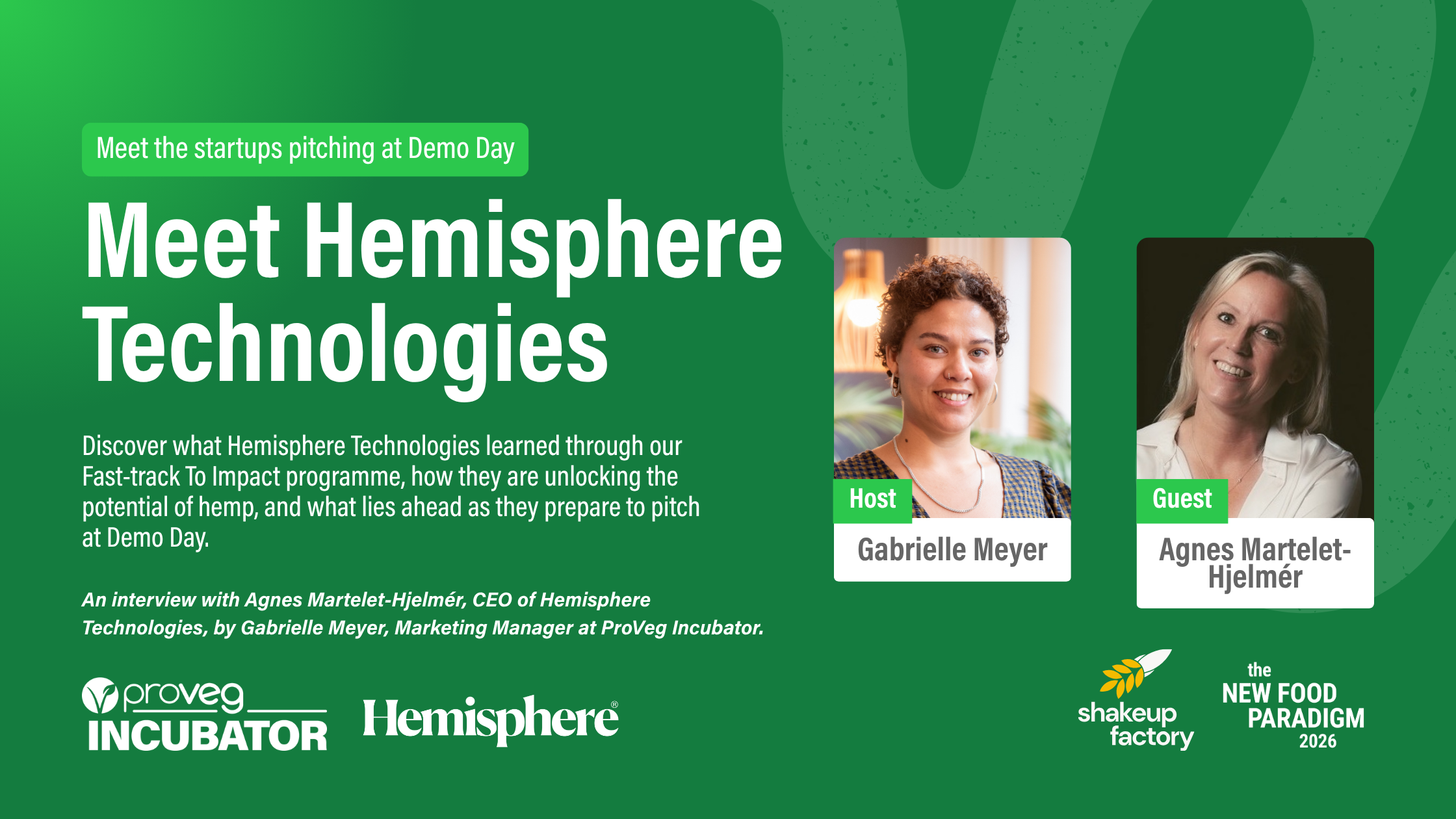
For decades, hemp has been called the crop of the future. So why hasn’t it become a staple ingredient in everyday food? Hemisphere Technologies, shares a clear answer: the problem was never the plant itself, but how it was processed.
Led by CEO Agnes Martelet-Hjelmér, the Swedish startup has developed a solvent-free process that transforms hemp seeds into a light, neutral-tasting protein designed for use in familiar foods, from bread to chocolate and protein bars. With its own certified factory, paying customers and products already on supermarket shelves, Hemisphere is working to bring hemp protein into the mainstream.
Gabrielle Meyer, Marketing Manager at ProVeg Incubator,spoke with Agnes about the technology behind Hemisphere, the commercial milestones that have brought it closer to that goal, and how ProVeg Incubator’s Fast-track To Impact program helped the team sharpen its strategy ahead of Demo Day at The New Food Paradigm 2026.
Unlocking hemp’s potential
For Agnes, the starting point was a gap in the plant protein market. As she explained to Gabrielle, existing options often involve compromises: soy requires allergen labeling, pea protein can have distinctive off-notes, and wheat gluten is unsuitable for people with coeliac disease. Food brands need alternatives that offer nutritional value without making product formulation more difficult.
“Hemp should have been the answer,” Agnes explained. The crop contains all nine essential amino acids and provides omega-3 and omega-6 fatty acids. It can also be grown as a regenerative crop. Yet conventional processing has often resulted in hemp protein with a dark color and grassy taste, limiting its use in mainstream products.
“When we started looking into this in 2020, we saw that the problem was never the plant. It was the processing. That insight became Hemisphere Technologies in 2021.”
The company developed a solvent-free extraction process, approved for a Swedish patent, that produces a light, neutral-tasting hemp protein. The process also yields cold-pressed hemp oil and hemp hearts, making use of the seed across multiple product streams.
As Agnes explained during the interview, the aim is to allow food manufacturers to work with hemp protein much as they would with established plant proteins, without compromising on the taste of the final product.
From processing breakthrough to products on shelves
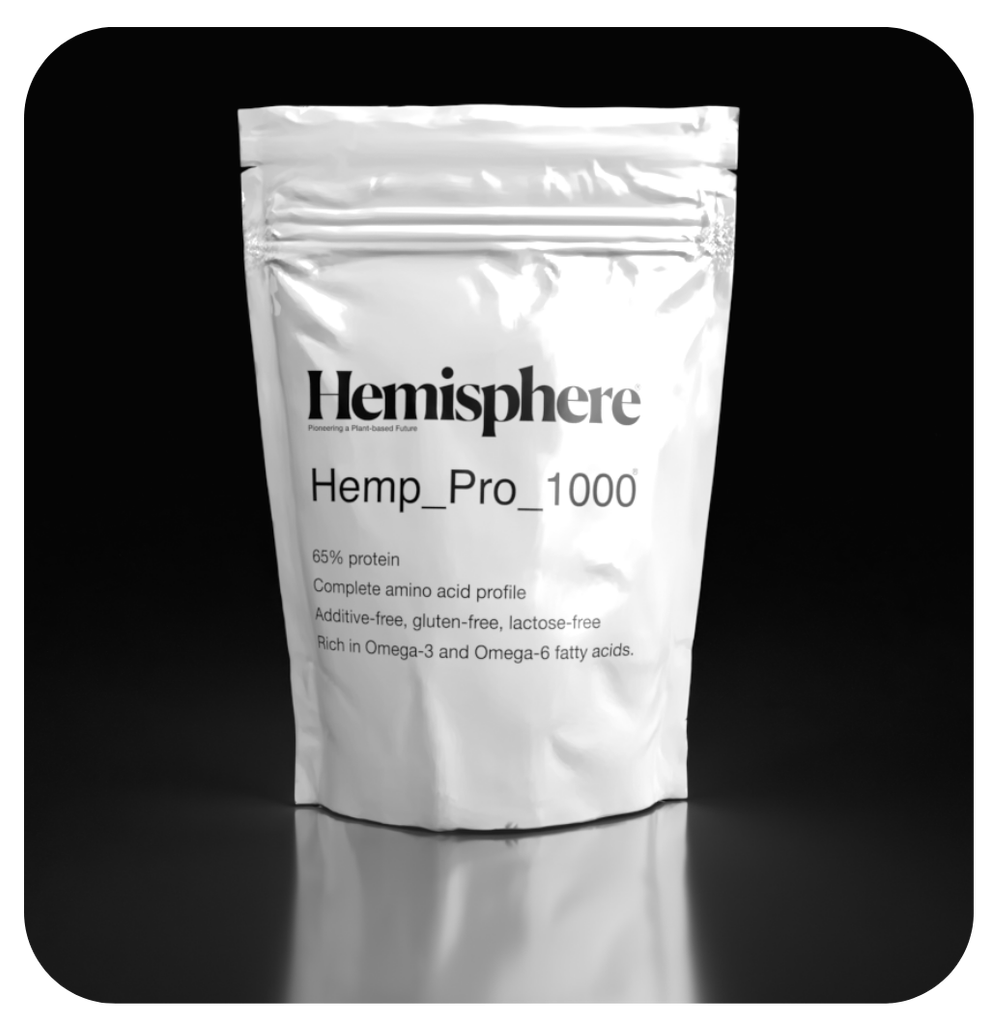
Hemisphere’s technology is designed to address several barriers that have held hemp protein back: taste, formulation, clean-label requirements and production at scale.
According to Agnes, the company’s hemp protein has performed better than pea and rice protein in blind taste tests. It contains 65% protein and all nine essential amino acids, and is produced without solvents. The company also highlights its EU Organic and Non-GMO credentials.
The technology is already operating at commercial scale in Hemisphere’s own FSSC 22000-certified factory in Sweden, using European-grown hemp seed. From the same raw material, the company produces protein, oil and hemp hearts, with a zero-waste approach intended to improve production economics as volumes increase.
One milestone stands out: taking its hemp protein from idea to shelf in under two years.
“We built and certified our own factory in Sweden, and our protein is now in bread sold by a Swedish bakery chain,” Agnes told Gabrielle.
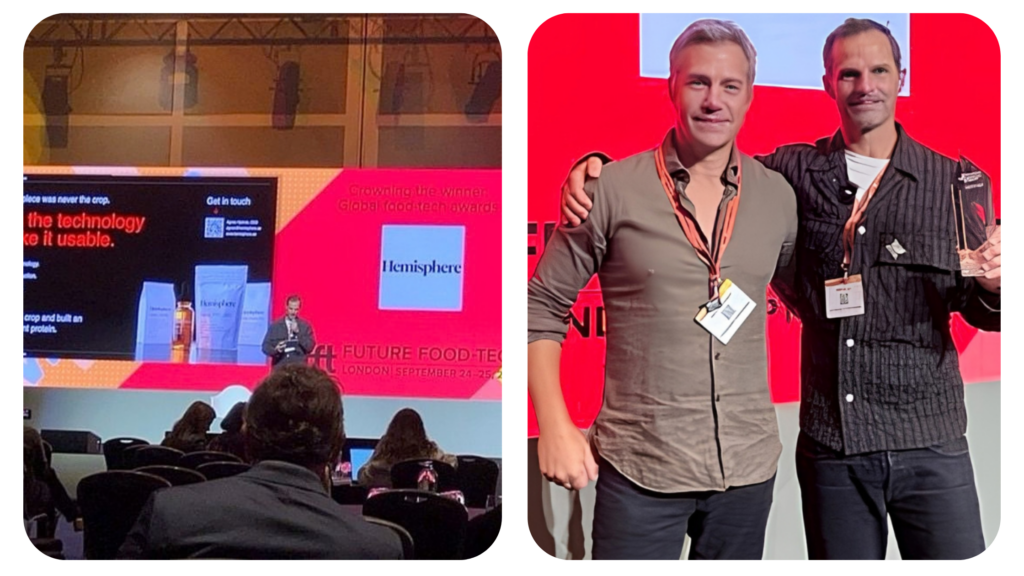
The company reports that it received its first full-size orders in 2026 and now has repeat paying customers. It projects revenue growth from €0.1 million in 2026 to €2.3 million in 2027, with break-even planned for 2027. Hemisphere was also named a winner of the Global Food Tech Awards EMEA 2026.
These milestones provide tangible evidence of commercial progress as the company prepares for its next stage of growth.
Finding the right customers through Fast-track To Impact
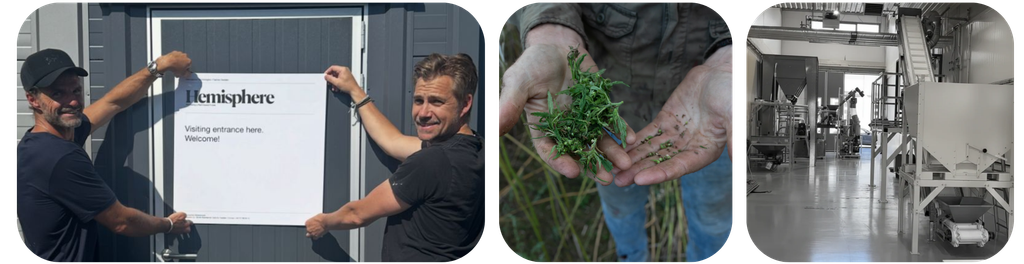
Hemisphere entered 2026 exploring several potential markets, from bakery and sports nutrition to supplements, food and pet food. However, proof-of-concept work helped the team identify where its protein was most likely to gain traction first: bakeries.
As Agnes explained, bakeries face growing pressure to develop products that meet demand for high-protein, clean-label and allergen-friendly options. They can also have shorter sales cycles, giving Hemisphere a more direct route from product trials to commercial orders.
“We narrowed down who our customer is,” Agnes told Gabrielle. “Our sales model is now simple – show the protein working in the bakery’s own product, then build repeat orders.”
This more focused approach has helped the team prioritize better-qualified leads and shorten the path from trial to order.
The program also helped Hemisphere refine how it communicates its progress to investors. Rather than focusing solely on the technology, the team learned to consider the questions different types of investors are likely to ask and make its existing proof points more visible.
“The best advice we received – from the program’s sessions, mentors and coaches – was to look at Hemisphere the way each type of investor does, and to see which of their questions we can already answer,” Agnes explained.
That meant bringing the company’s certified factory, patent, paying customers and commercial product applications to the forefront of its story. For a startup working to bring an underused crop into mainstream food, these milestones help demonstrate not only what the technology can do, but also what the business has already achieved.
The value of perspective, community and connections
For Agnes, the impact of Fast-track To Impact goes beyond refining a pitch or identifying the right customer segment. The program has also given the team a clearer perspective on its strengths and next steps, while connecting it with people facing similar challenges in the food system.
“Joining Fast-track to Impact was one of the best things that happened to us this year, and I am sure it will shape Hemisphere’s future,” Agnes told Gabrielle.
She highlighted the value of seeing a company through the eyes of investors, experts and fellow founders, as well as the relationships built through sessions, mentors and coaches.
When Gabrielle asked what she would say to founders considering a future cohort, Agnes’s answer was unequivocal:
“Apply without hesitation.”
For Agnes, the program provides perspective, a supportive community and connections that can continue opening doors long after it ends. As she put it in her own summary of the experience, “Fast-track to Impact gives you the perspective, the community and the connections to turn a good idea into a business that can change the food system.”
Scaling supply alongside demand
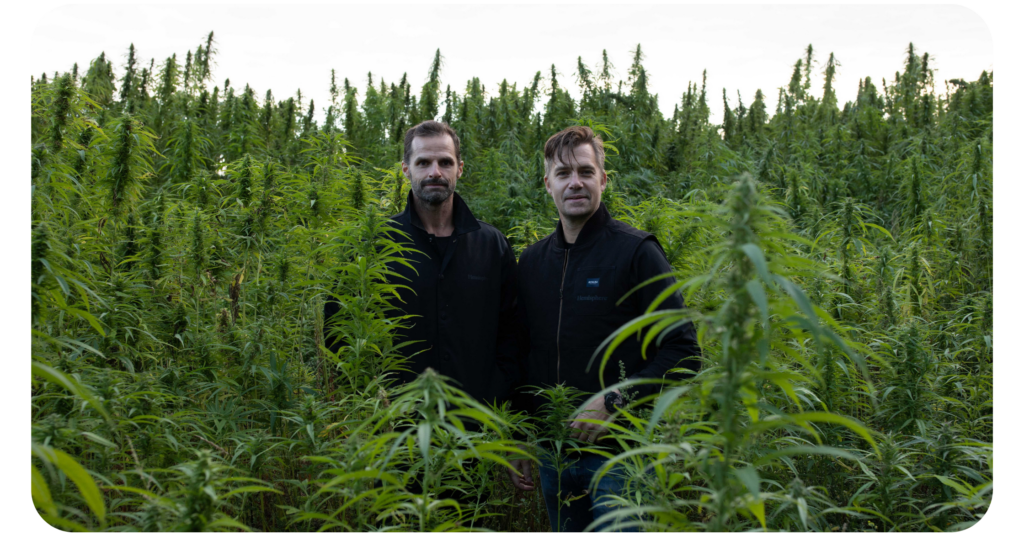
As Hemisphere grows, one of its biggest challenges is securing enough high-quality hemp seed at a reliable and competitive price.
Hemp remains a relatively small crop in Europe and is harvested once a year. Agnes noted that seed accounts for around 60% of the company’s total costs, making supply security a key factor in its ability to scale.
The team is addressing this through long-term contracts with European growers, careful inventory planning across the harvest year and its zero-waste production model. As volumes increase, the company aims to use these partnerships to reduce its cost per kilo and make hemp protein more competitive with mainstream plant proteins.
Hemisphere is raising funds to support its next phase of growth and is seeking partnerships with food manufacturers, ingredient groups and distributors across Europe, alongside long-term partners in its seed supply chain. Agnes explained that the most valuable investors will bring knowledge of the European food industry, the ability to open doors and a shared commitment to better plant-based food.
“Hemp will be the next oat”
Hemisphere’s ambition reaches beyond introducing another plant protein ingredient. Agnes wants healthy, sustainable protein to be affordable and available to everyone, everywhere. She sees regenerative crops such as hemp as part of a food system that can provide nutritious everyday foods while supporting soil health and carbon capture.
Her prediction for the future is bold: “Hemp will be the next oat – the crop everyone underestimated, until it was everywhere.”
Selected to Pitch at ProVeg Incubator Demo Day
Hemisphere was selected to pitch at ProVeg Incubator Demo Day following its participation in Cohort 2 of the Fast-track To Impact program.
ProVeg Incubator Demo Day will take place at The New Food Paradigm 2026, hosted by ShakeUp Factory.